Salvador, Brazil · Part 1
Salvador: The city that completely stole my heart - Part 1
27 September 2026
Salvador was never our original destination. While planning our trip to Brazil and searching for the cheapest flights from the Netherlands, we realized it was much more affordable to fly into Salvador first and then take a domestic flight to Rio de Janeiro a few days later.
Why not? We thought.
The truth is, I knew almost nothing about Salvador. But I loved the idea of experiencing two completely different sides of Brazil in one holiday. We didn’t manage to see everything we had planned, yet somehow we experienced so much more than we expected.
We travelled at the end of November, with a layover in Paris. Salvador, the capital of the state of Bahia, is a place where Afro-Brazilian culture isn’t something you simply observe- it’s something you feel. Colour, music, colonial architecture, and an energy that seems to live on every street corner.
We arrived late in the evening, so apart from a short walk around the hotel and a quick dinner, we didn’t discover much. Our real introduction to Salvador would begin the following morning.
Porto da Barra & the best Açaí I’ve ever had
We stayed in Porto da Barra, at Grande Hotel da Barra, literally just a few steps from the beach. The neighborhood is full of restaurants, bars, and small cafés along the waterfront, making it the perfect area if you enjoy exploring on foot.
And somewhere along that promenade, we had the best açaí of our lives.
I’m still not sure whether to call it a dessert, breakfast, or a healthier version of ice cream. All I know is that after the first spoonful, we immediately started looking for an excuse to have another one. It’s refreshing, fruity, and easily one of my favourite things I ate in Brazil. If you’re nearby, Sorveteria da Ribeira is absolutely worth the stop.
The best decision we made that day
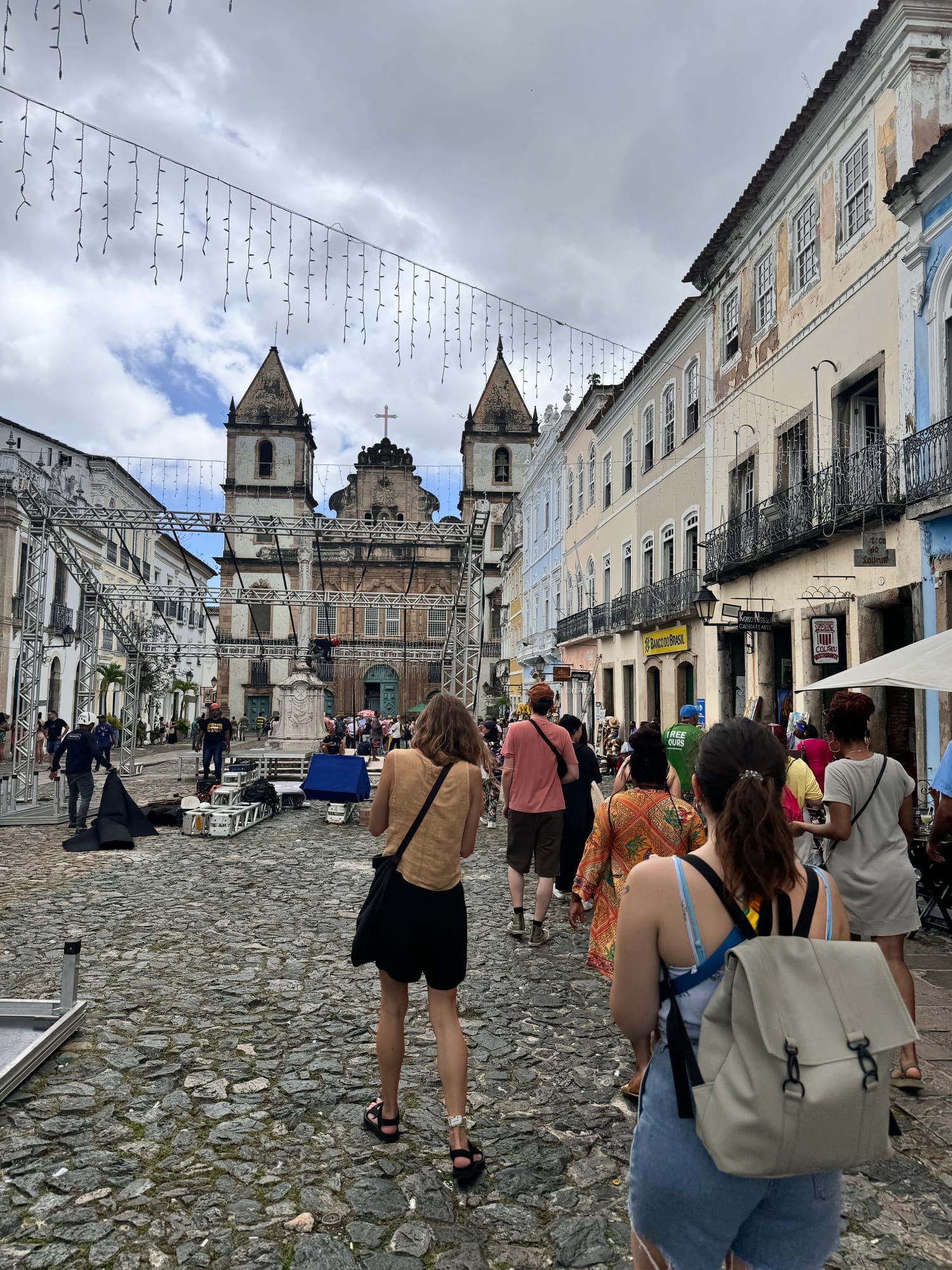
Our first full day was dedicated to walking all the way to Salvador’s historic centre. The walk was somewhere between 30 minutes and an hour; I honestly can’t remember, and I’m not going to lie to you. It might sound a little crazy, but we wanted to experience the city by walking through it, and it ended up being one of the best decisions we made.
Something my friend Emmy introduced me to, and something I’ll probably do on every trip from now on, is booking a walking tour with a local guide. There are countless options online, and it’s one of the easiest ways to understand the history and culture of a place beyond its landmarks.
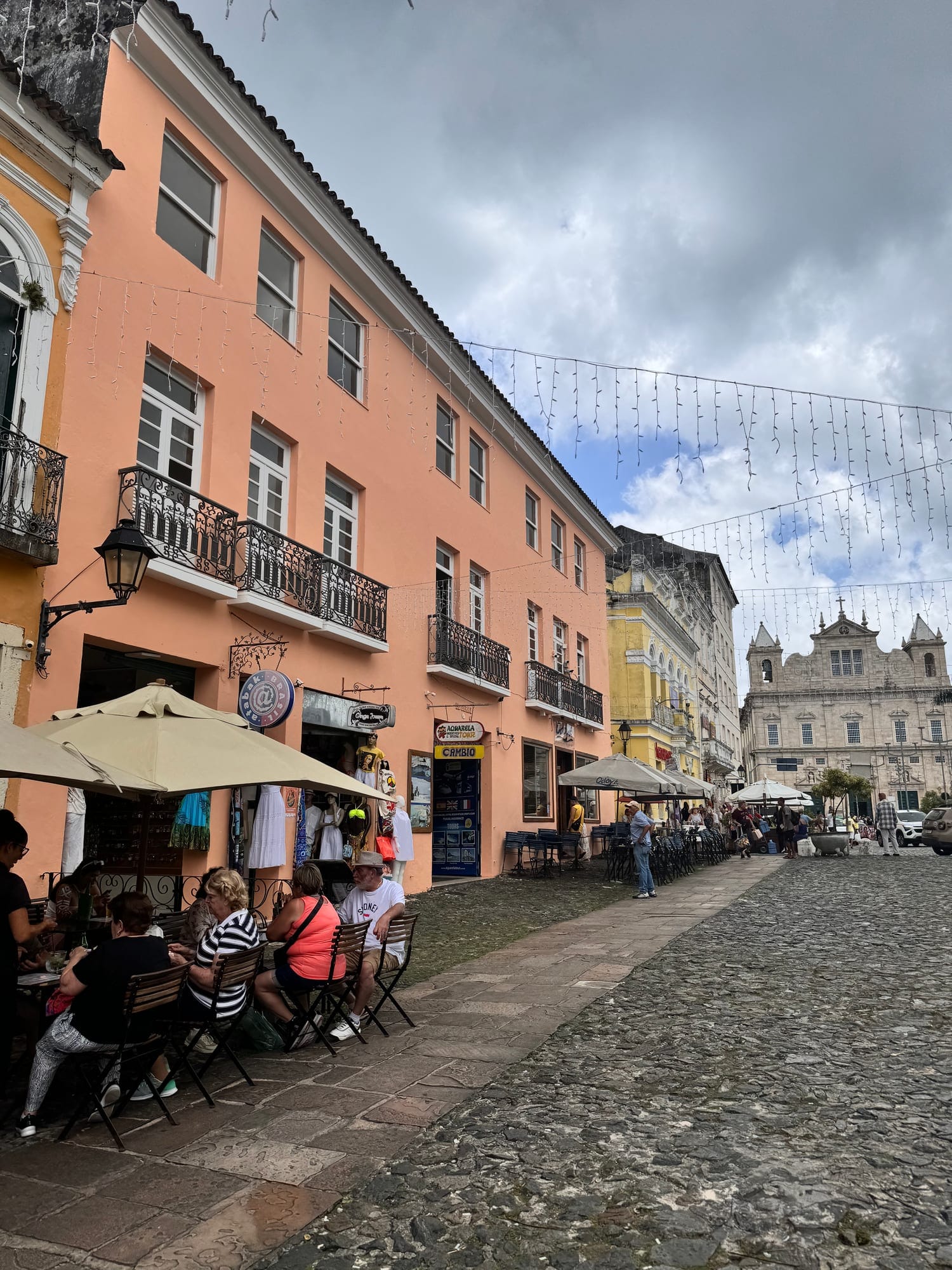
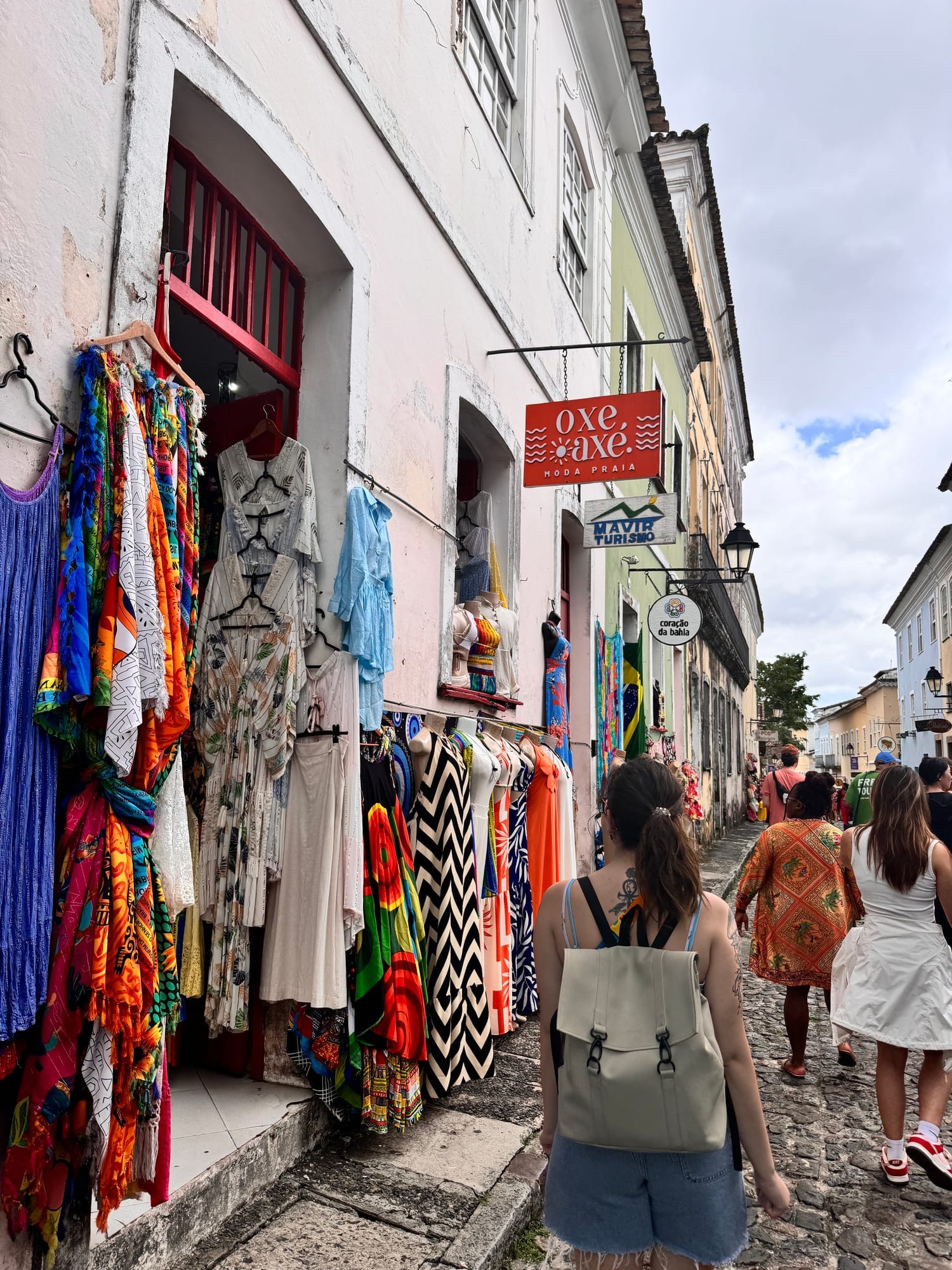
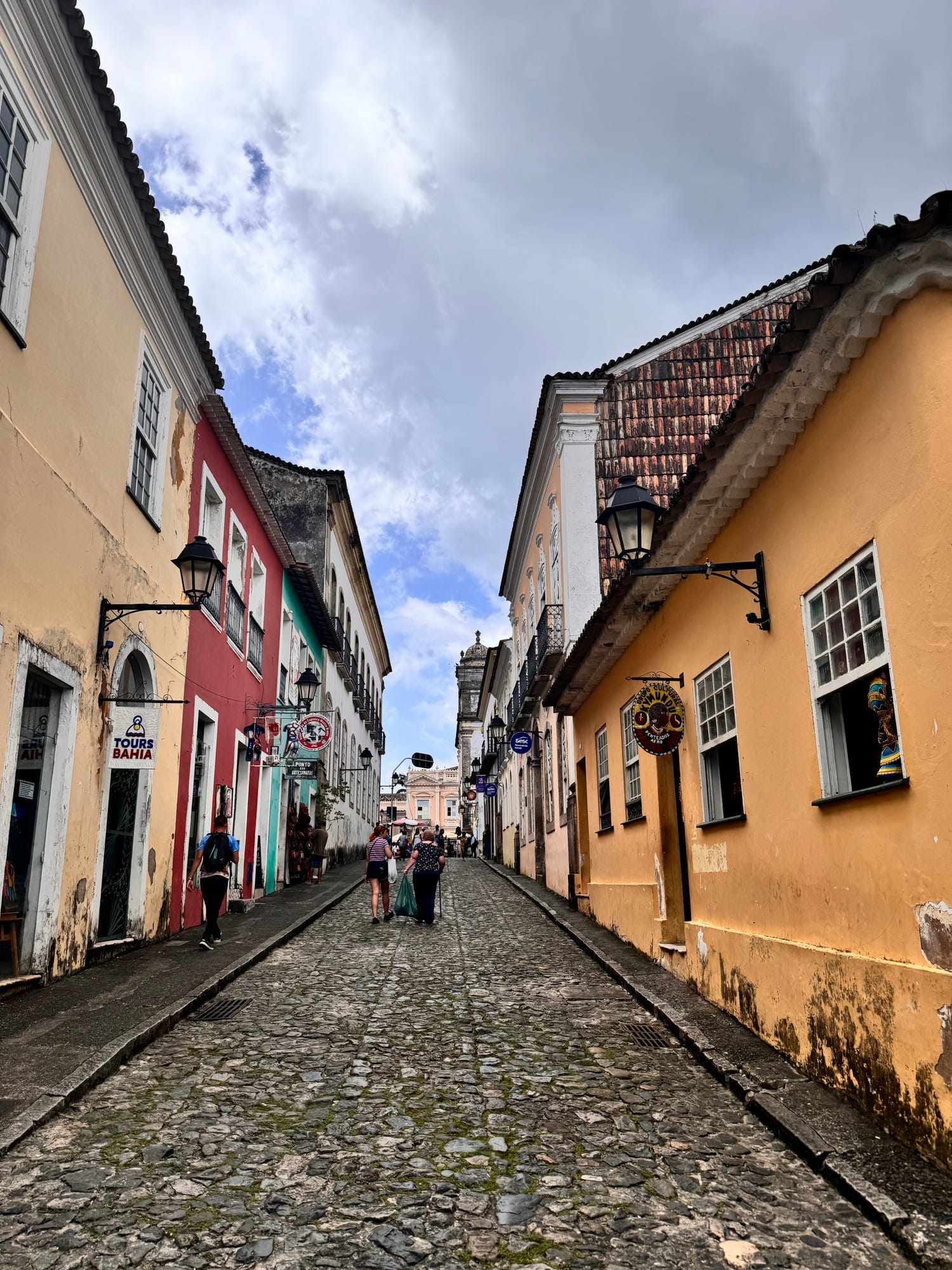
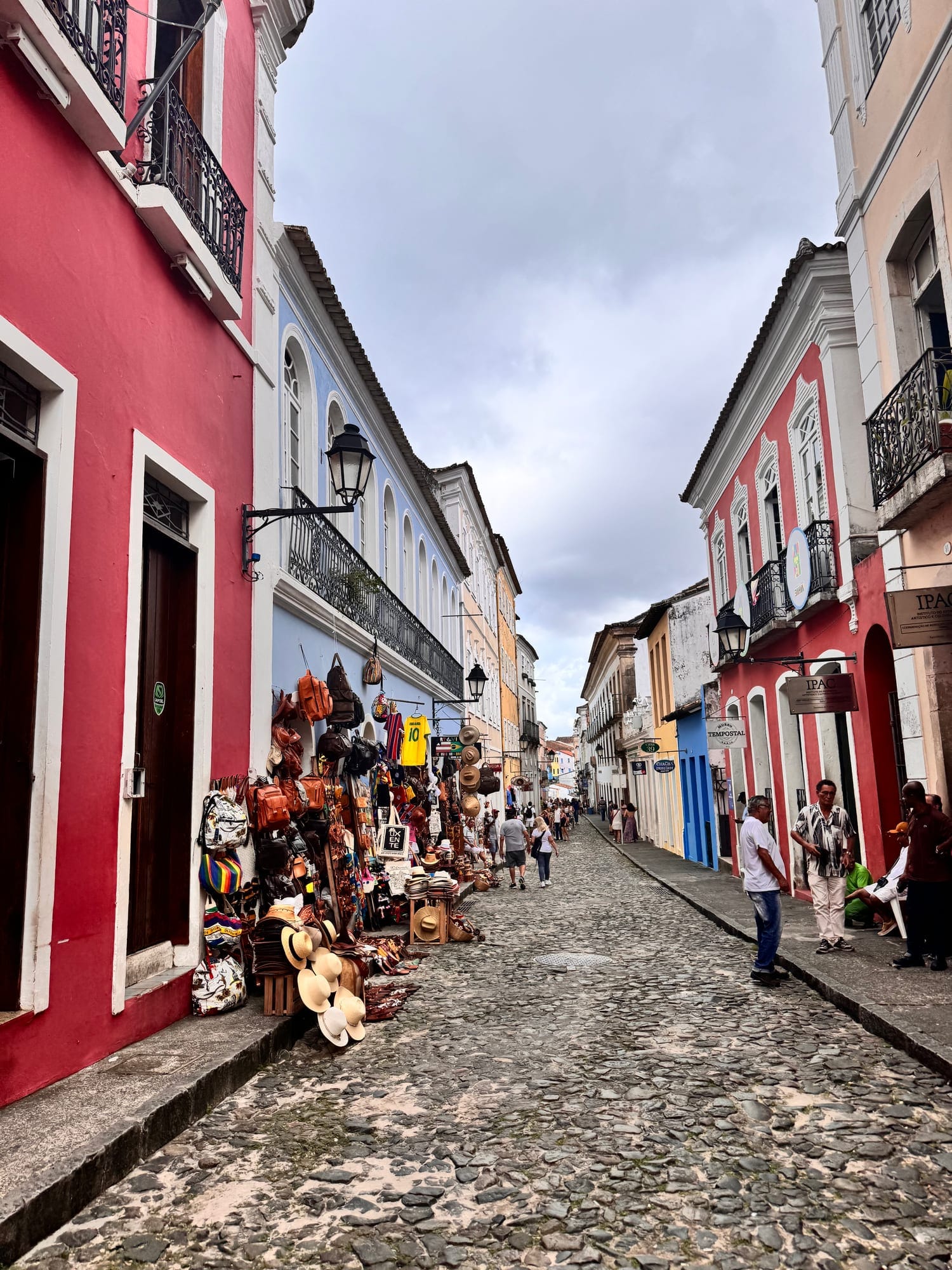
Together with our group, we wandered through Salvador’s colourful streets while learning about Bahia’s history, its colonial past, and the African influences that have shaped the city’s identity.
Honestly? 10/10 experience.
Elevador Lacerda & Mercado Modelo
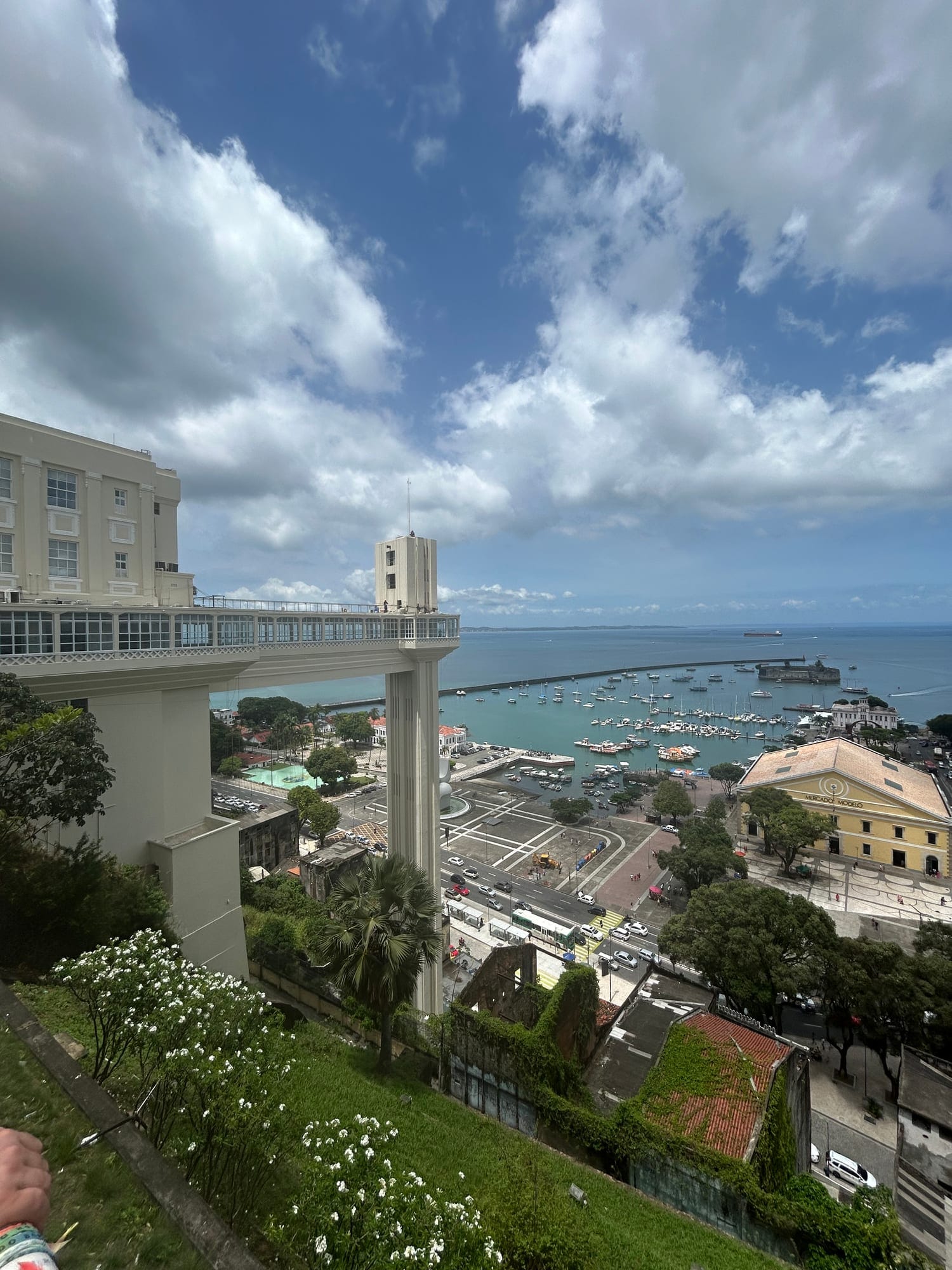
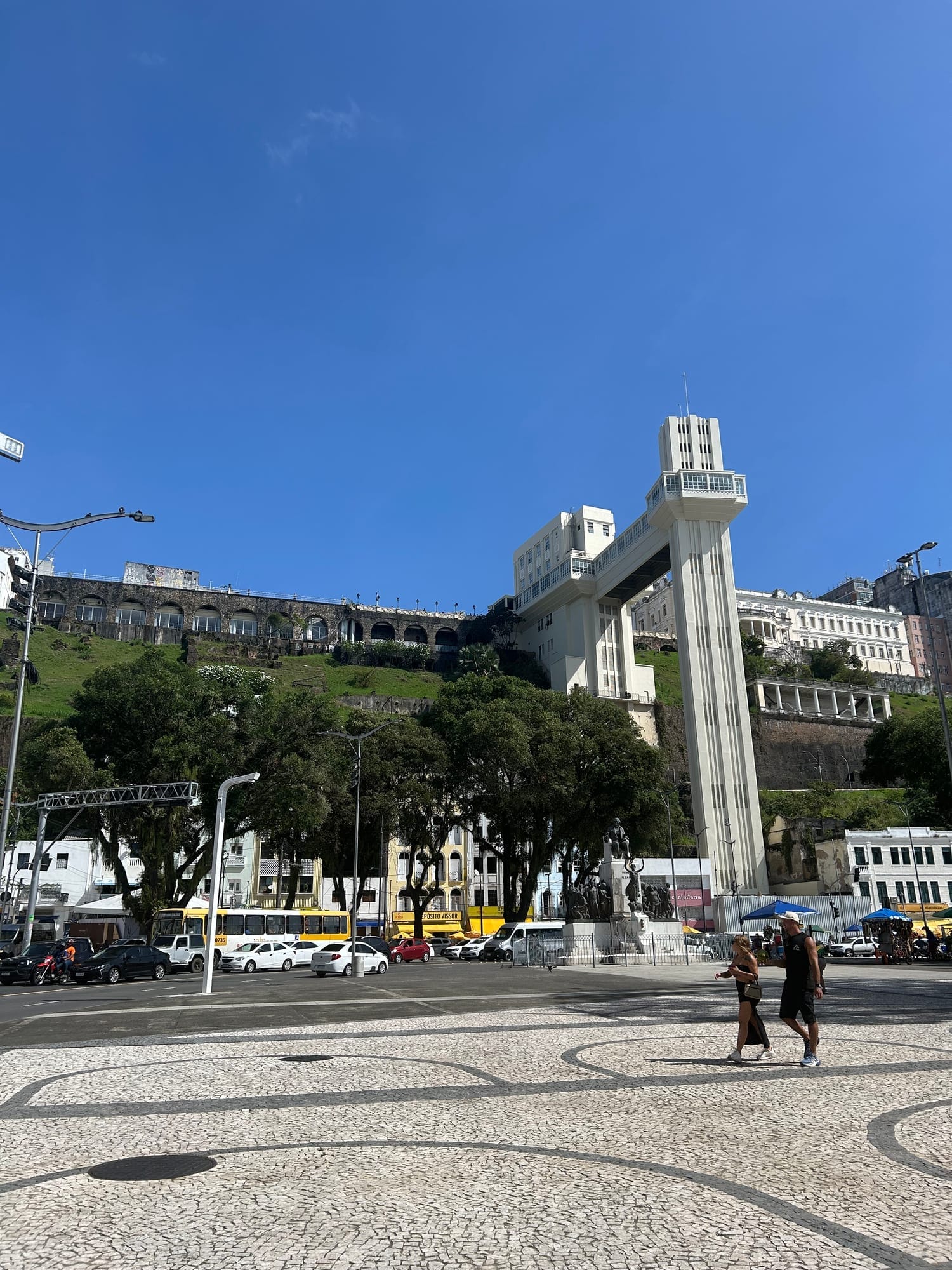
Our tour eventually led us to Elevador Lacerda, Salvador’s iconic public elevator connecting the Upper City (Cidade Alta) with the Lower City (Cidade Baixa).
Of course, with our luck, it was closed for maintenance during the exact days we were there.
Even so, the panoramic view from the upper level was beautiful. Just below sits Mercado Modelo, a historic market filled with handmade crafts, local art, musical instruments, and endless souvenirs. If you’re hungry, the upper floor is also a great place to try traditional Bahian food.
We ended up taking an Uber down instead, as the walk is fairly long and not the route we felt most comfortable doing on our own.
A city you don’t just see - You feel
After the tour, our day was far from over. We kept wandering for hours, completely captivated by Salvador’s colourful buildings, independent shops and the music drifting through its streets.
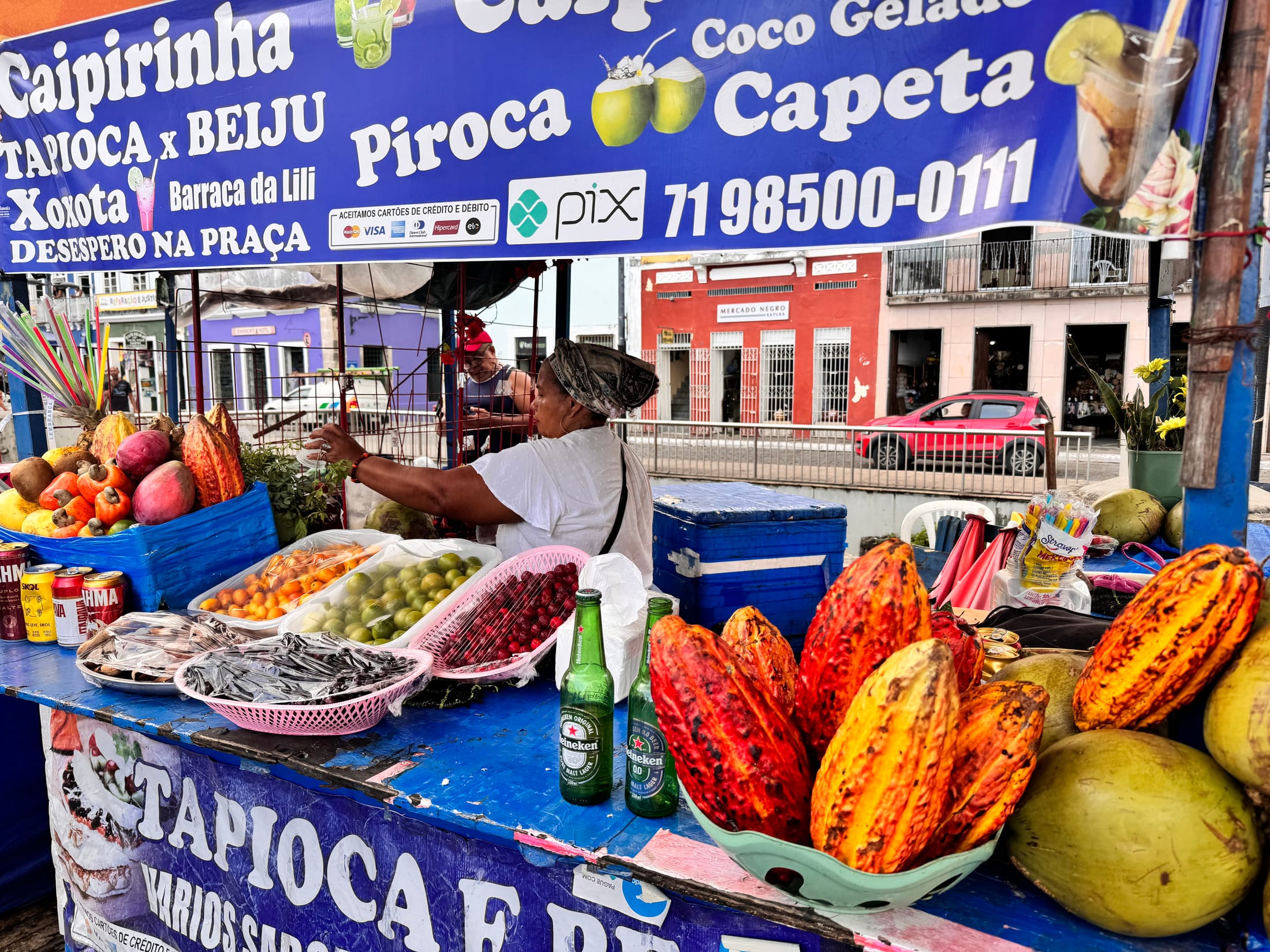
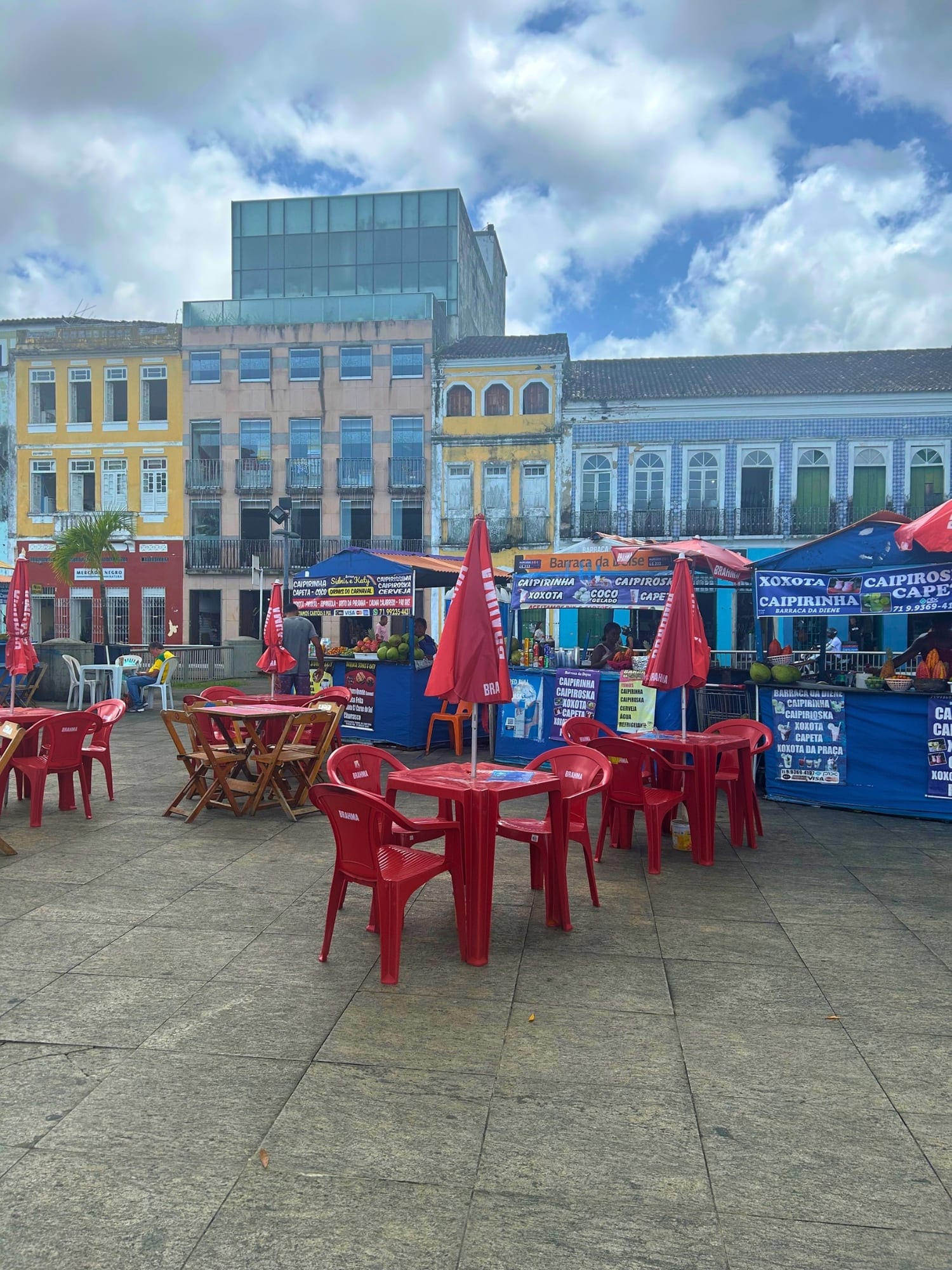
If there’s one place where you truly feel the heartbeat of the city, it’s Praça da Sé. Salvador’s culture isn’t something you simply see; it’s something you absorb in every street musician, every conversation and every little stand selling local cocktails.
And while you’re there, do yourself a favour and try cachaça, Brazil’s iconic sugarcane spirit, mixed with fresh tropical fruit. It’s almost impossible to pick a bad combination.
The famous Moqueca
We finished the day at Ré Restaurante Dona Suzana, one of the city’s best-known spots for Moqueca, Bahia’s traditional seafood stew.
We ordered the Moqueca de Camarão (shrimp moqueca), and without exaggerating, it was one of the best meals of our entire trip.
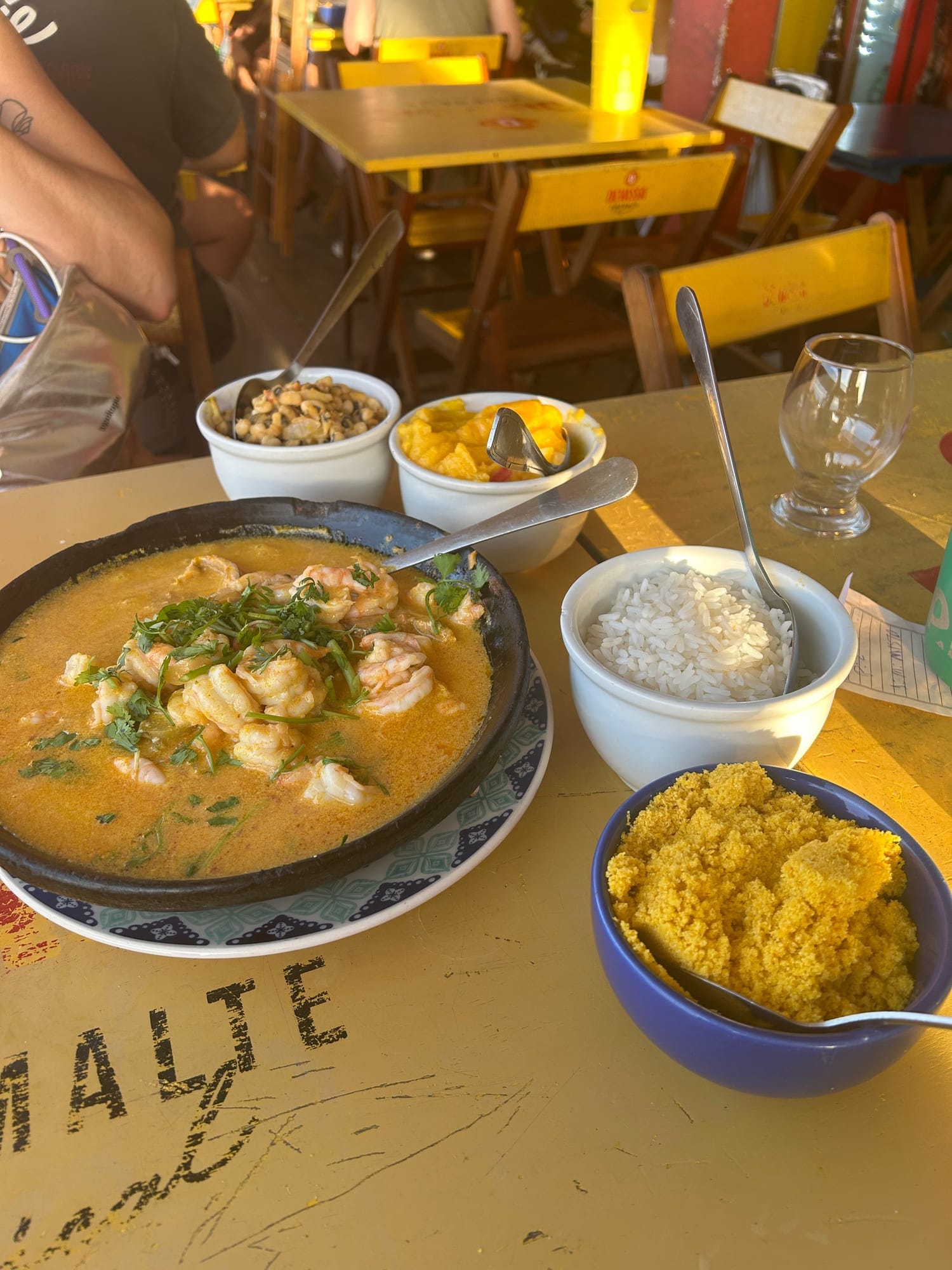
The restaurant is tucked inside a small neighborhood that might feel a little intimidating at first, but because it’s so popular, you’ll find plenty of locals and visitors making the same journey.
My advice? Go outside peak hours; you’ll have a much better chance of getting a table.
We ended the evening exactly where it had begun: with a swim at Porto da Barra Beach before heading back to the hotel.
See you in Part Two.