Salvador, Brazil · Part 2
Salvador: The city that completely stole my heart - Part 2
27 September 2026
I genuinely tried to write this trip day by day. The problem is that it happened back in November-December 2024, and I’m sitting here reminiscing sometime in 2026. Safe to say… my memory has decided to laugh at me.
So, let’s not be hard on ourselves, Maria.
Instead of telling you exactly what happened each day, I’m going to share the moments I remember most vividly. After all, those are the memories that stay with you long after a trip is over.
The church of three wishes
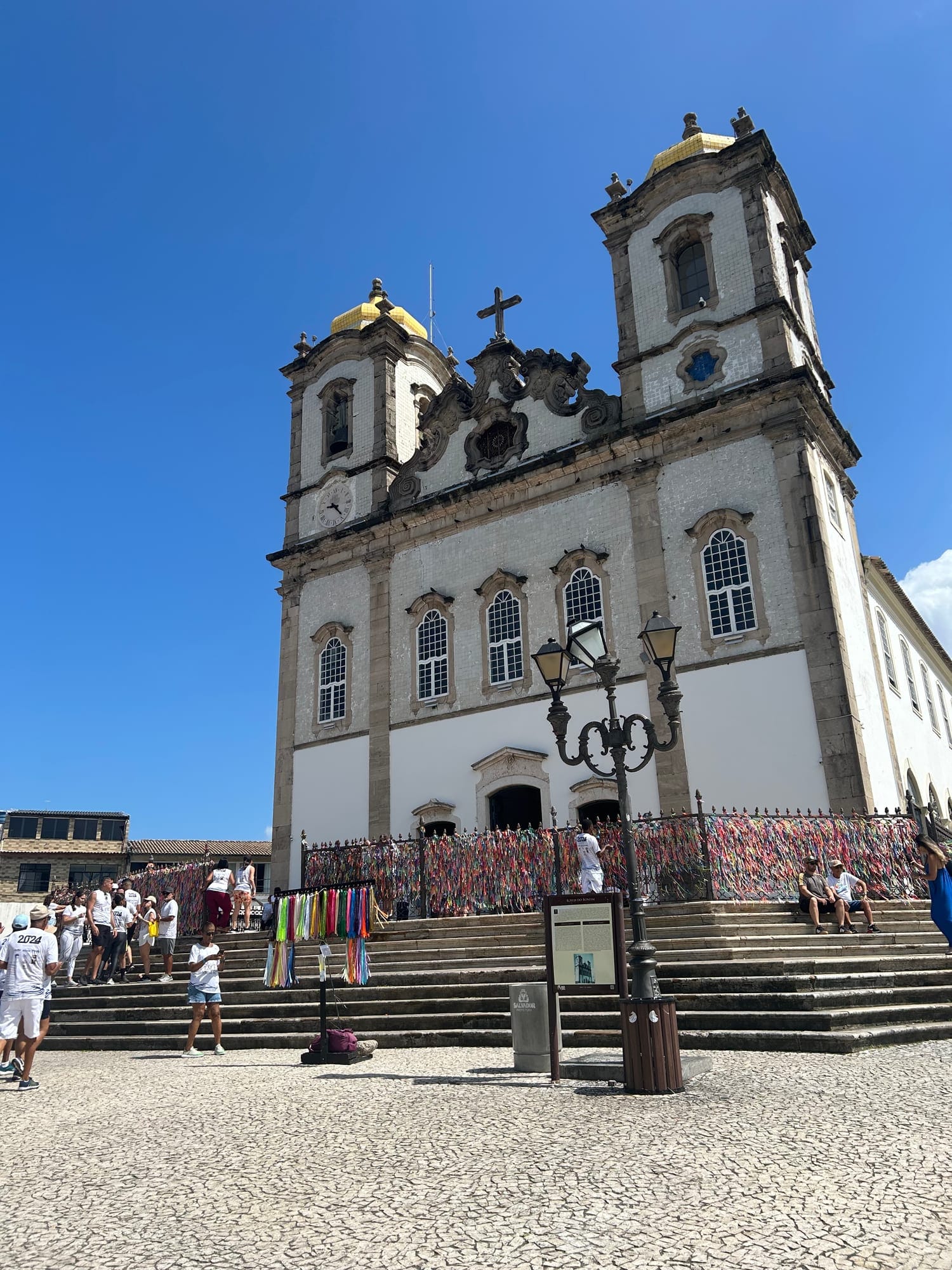
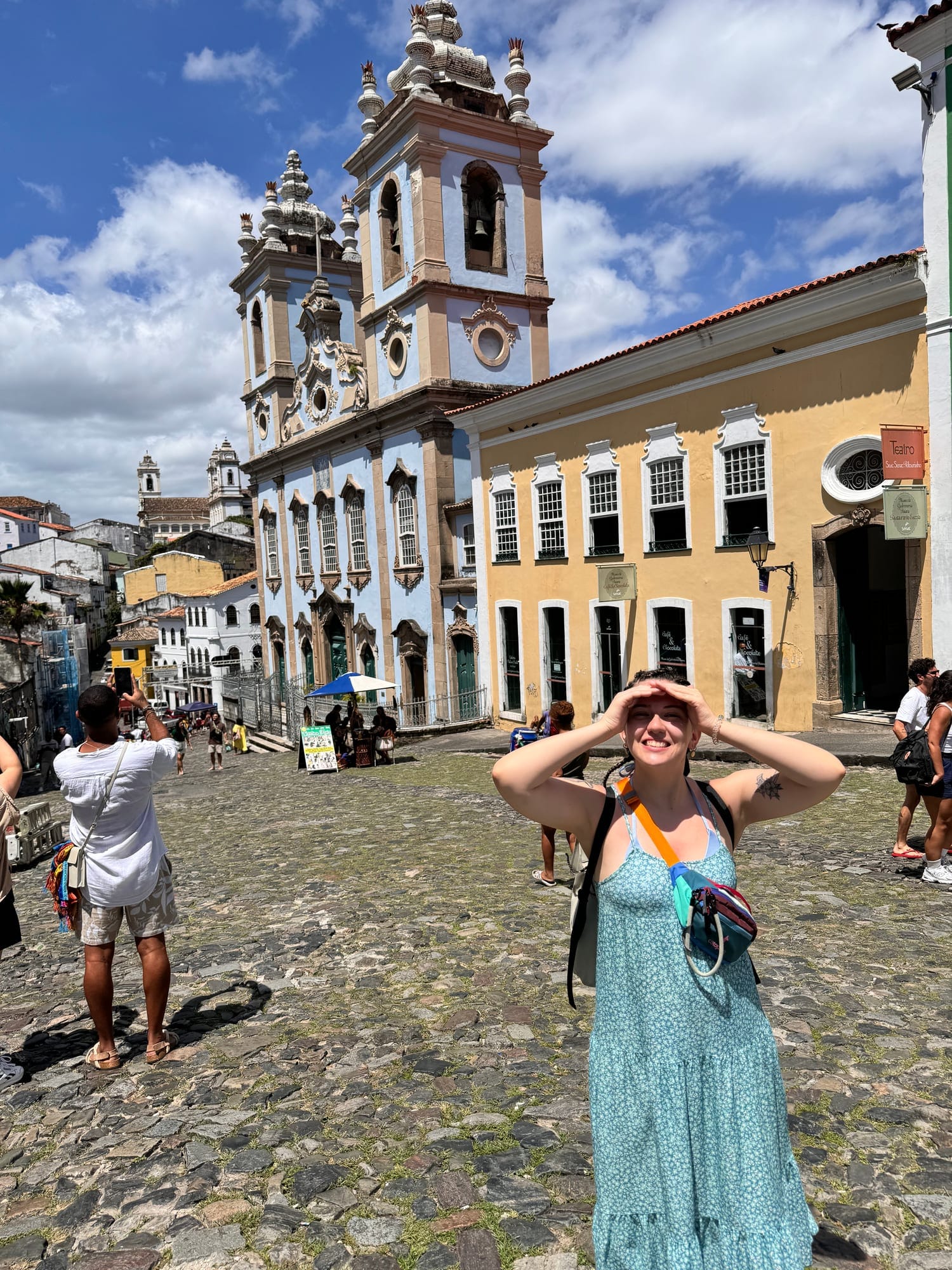
One of our first stops was the Church of Our Lady of the Rosary of the Black People.
It isn’t just a beautiful church; it’s one of Salvador’s most important historical landmarks.
It was built by Afro-Brazilian brotherhoods of both enslaved and free Black people, who were once forbidden from entering churches reserved exclusively for white worshippers. The construction took almost 100 years to complete.
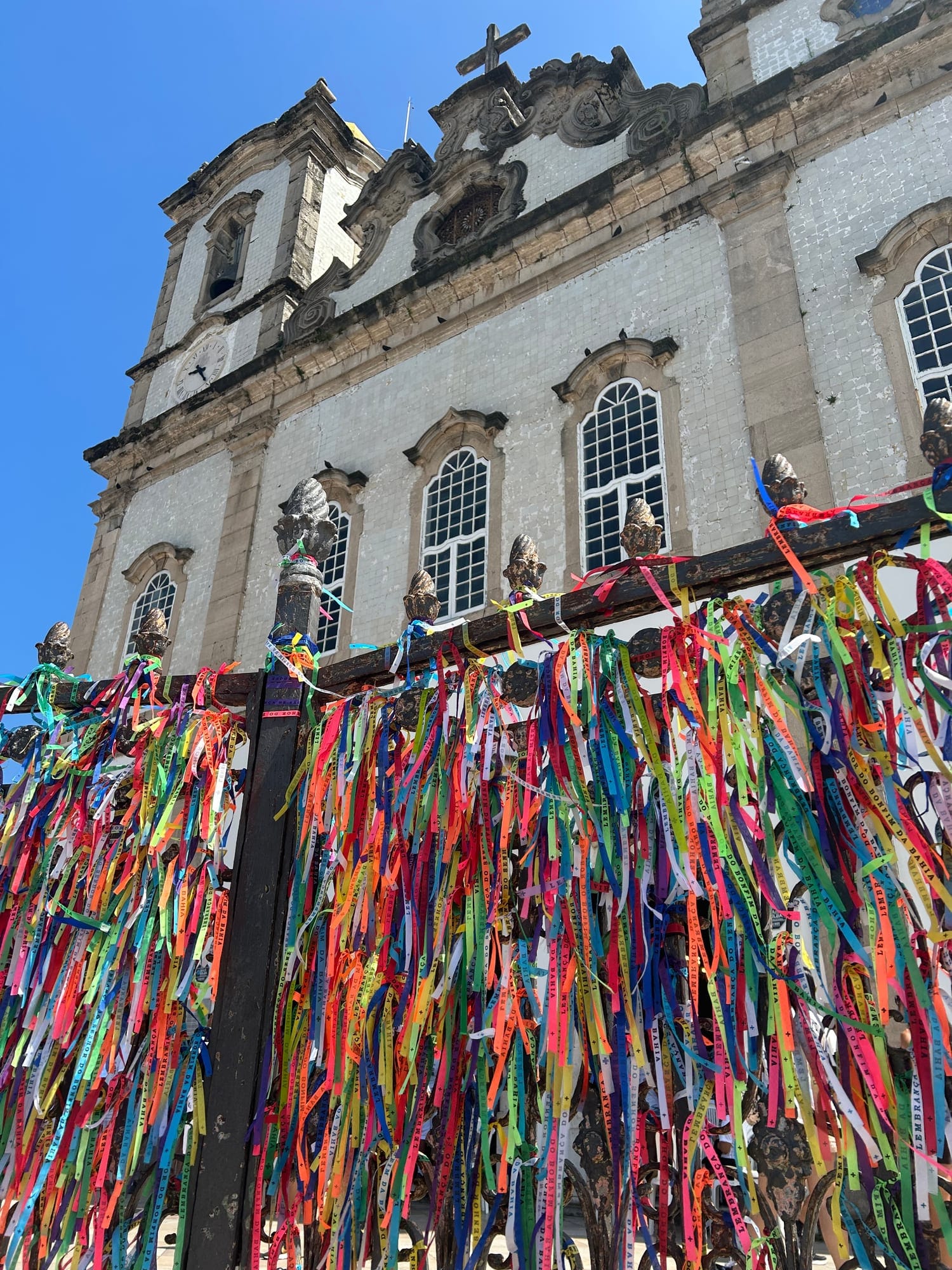
What stayed with me most, though, were the colourful ribbons known as Fitinhas do Senhor do Bonfim.
The tradition says you tie one either to the church railings or around your wrist, make three knots, and silently wish for something with each one. Your wishes are said to come true only once the ribbon naturally falls off over time.
Pelourinho: The heart of Salvador
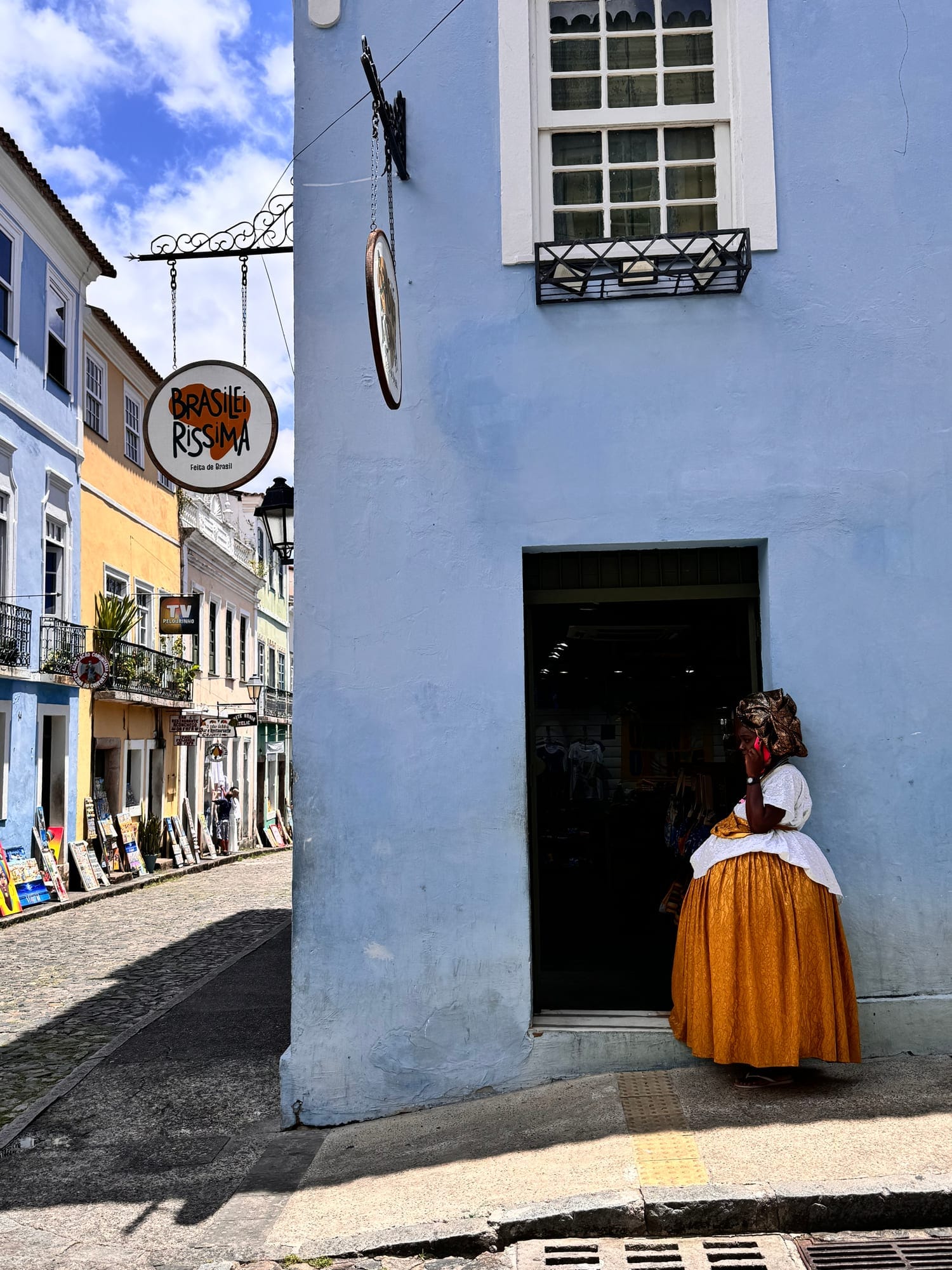
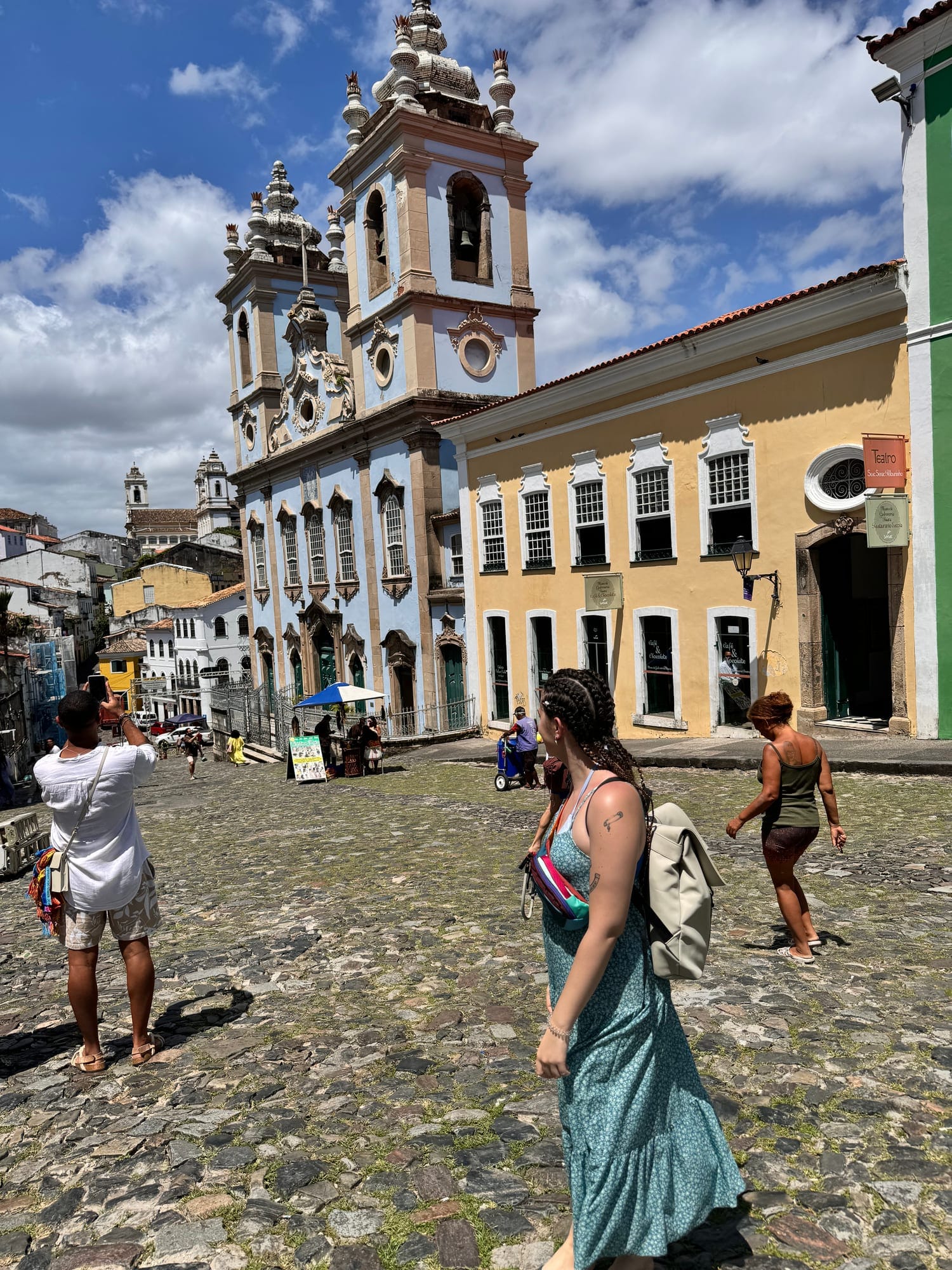
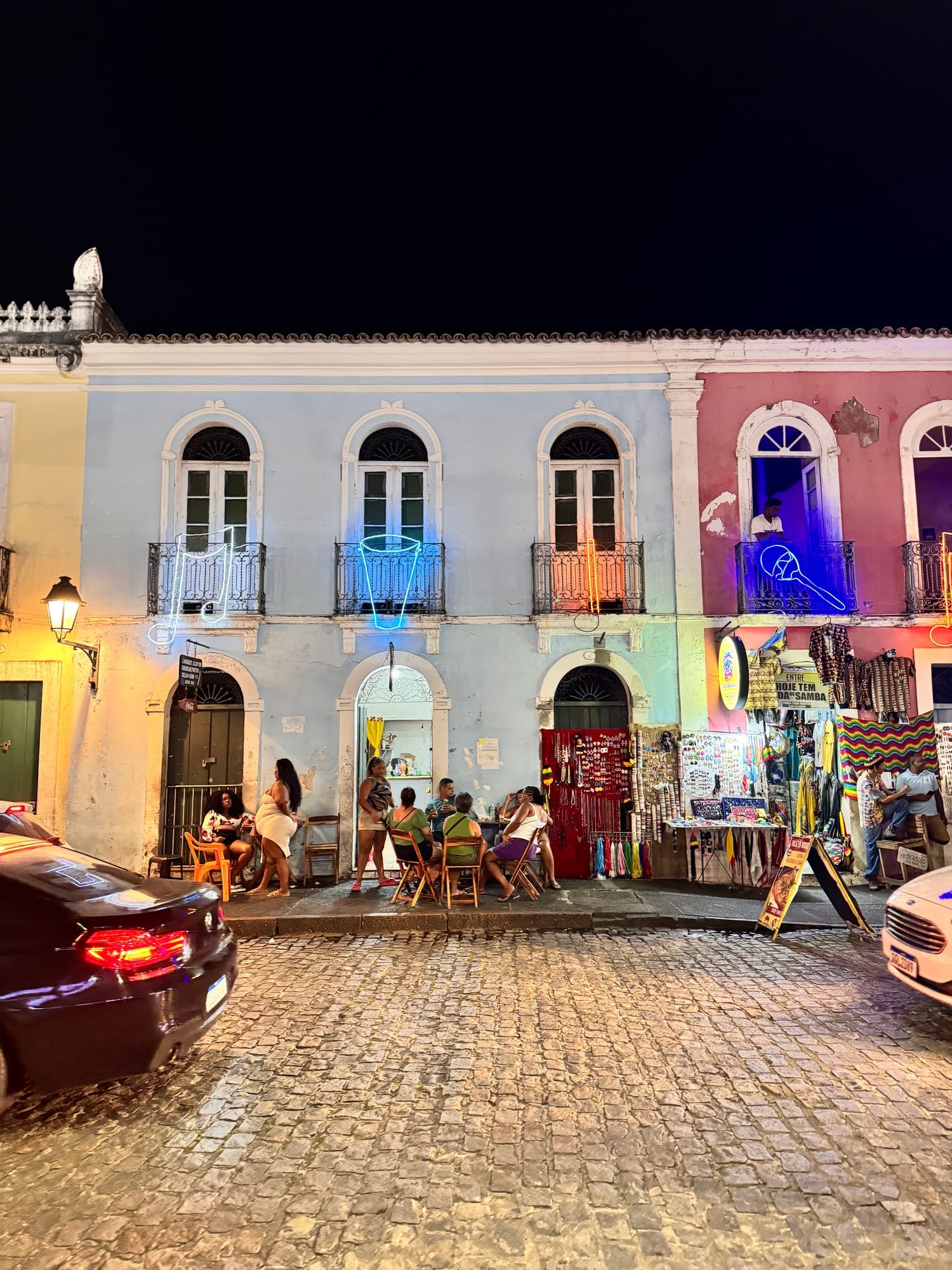
From there, we wandered back into Pelourinho, Salvador’s historic centre and a UNESCO World Heritage Site.
If I had to describe Salvador with a single image, it would be this neighbourhood.
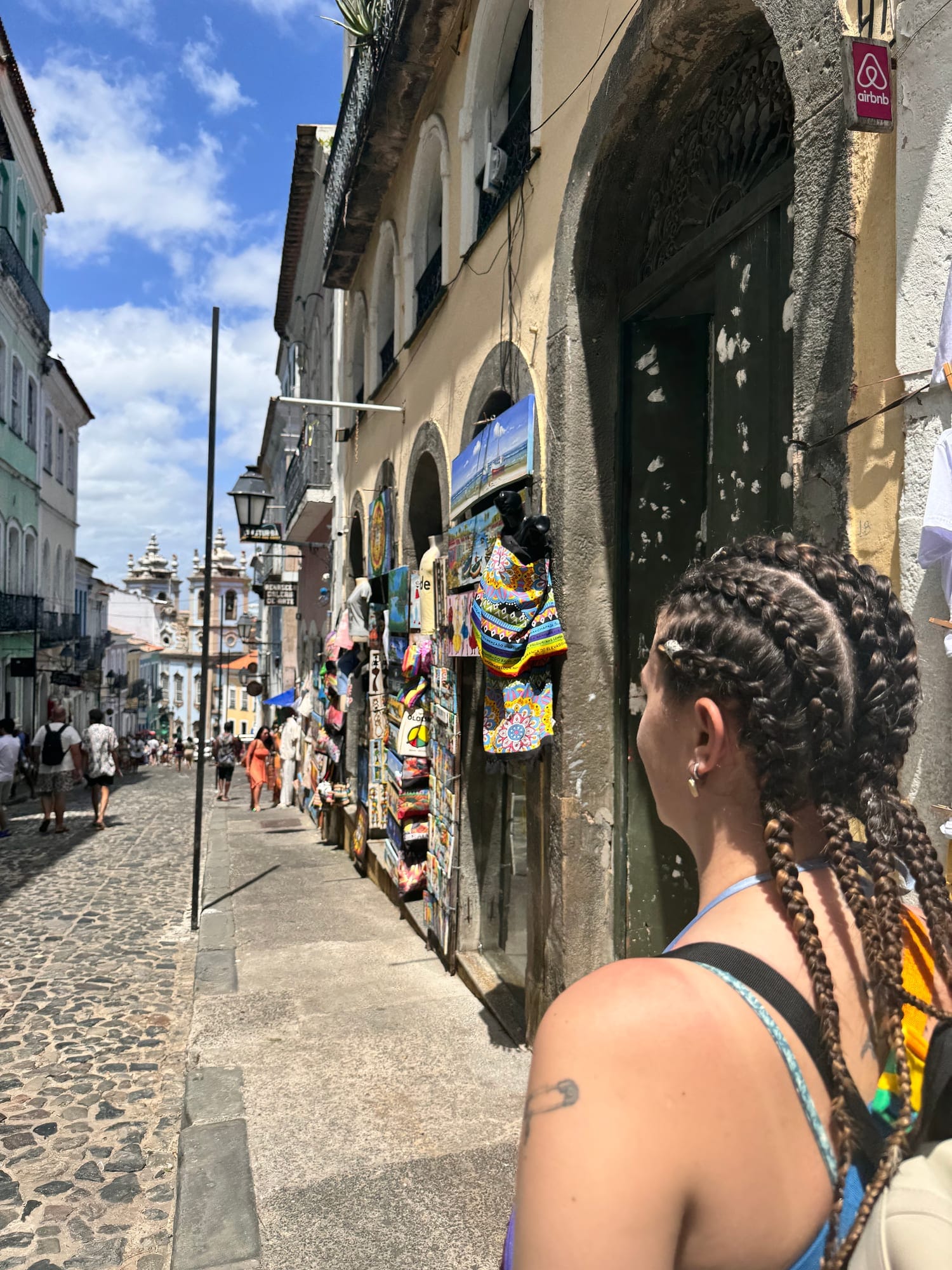
Colourful colonial buildings, cobbled streets, independent shops and music flowing through every corner. It’s one of those places where following a map almost feels like the wrong thing to do. The best moments happen when you simply allow yourself to get lost.
You’ll meet the Baianas de Acarajé, women dressed in traditional white clothing preparing Bahia’s most iconic street food. Street performers, musicians, and local bands seem to appear in every square.
And then we stumbled across Olodum.
Suddenly the drums started, and within seconds the entire street turned into a celebration. Before I knew it, I was dancing alongside strangers. It was one of those spontaneous travel moments you could never organise, and probably the one I remember most.
The flavours of Bahia
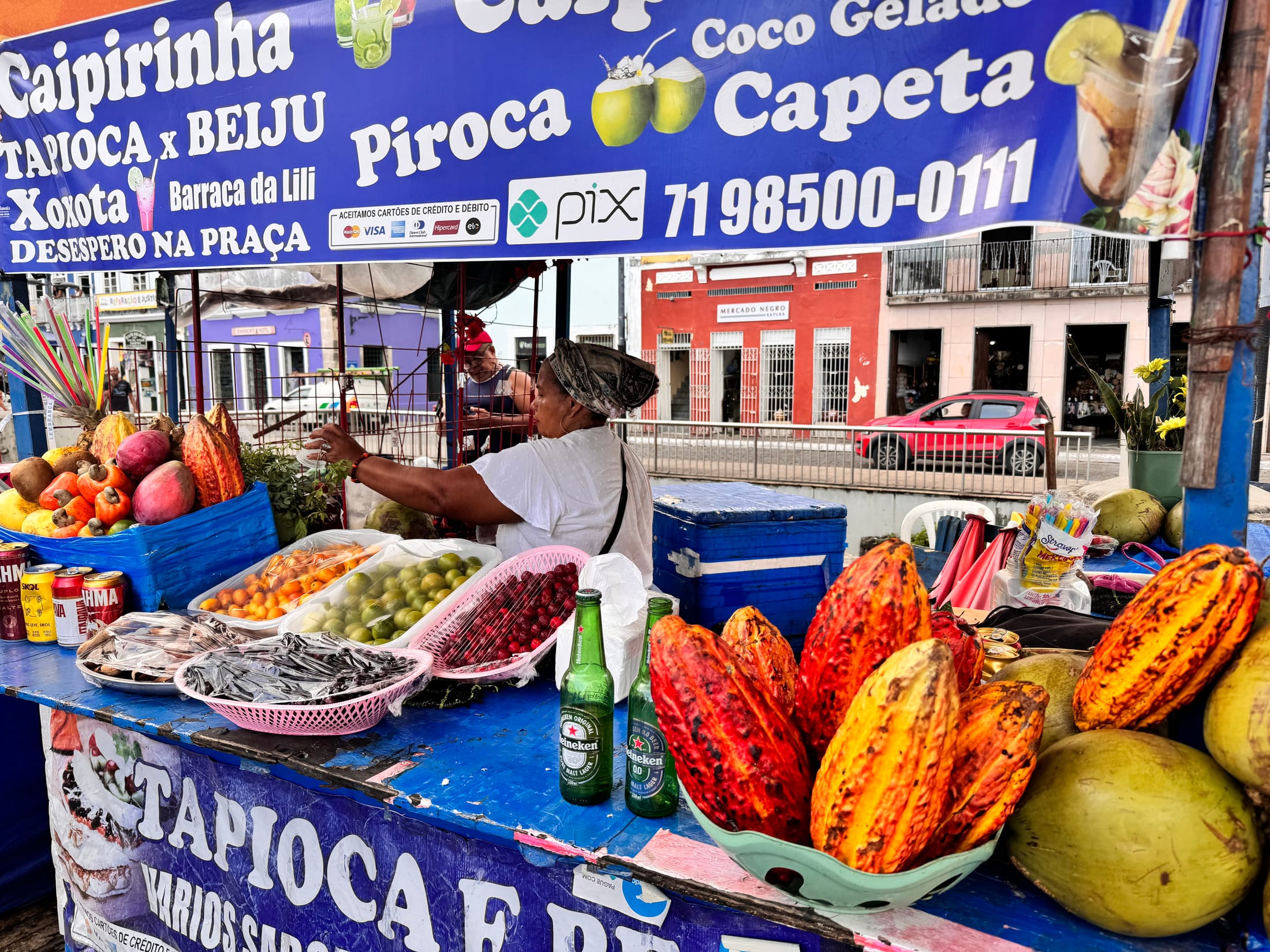
We spent hours wandering around Largo do Pelourinho, stopping whenever something looked too good to resist.
Fresh coconuts, tropical fruit juices, colourful cocktails and, of course, the famous Acarajé.
I’ll be honest, it wasn’t my favourite dish.
But I’m still glad I tried it. For me, food is one of the best ways to understand a place. You don’t have to love everything; you just have to be curious enough to taste it.
A place I didn’t expect to love
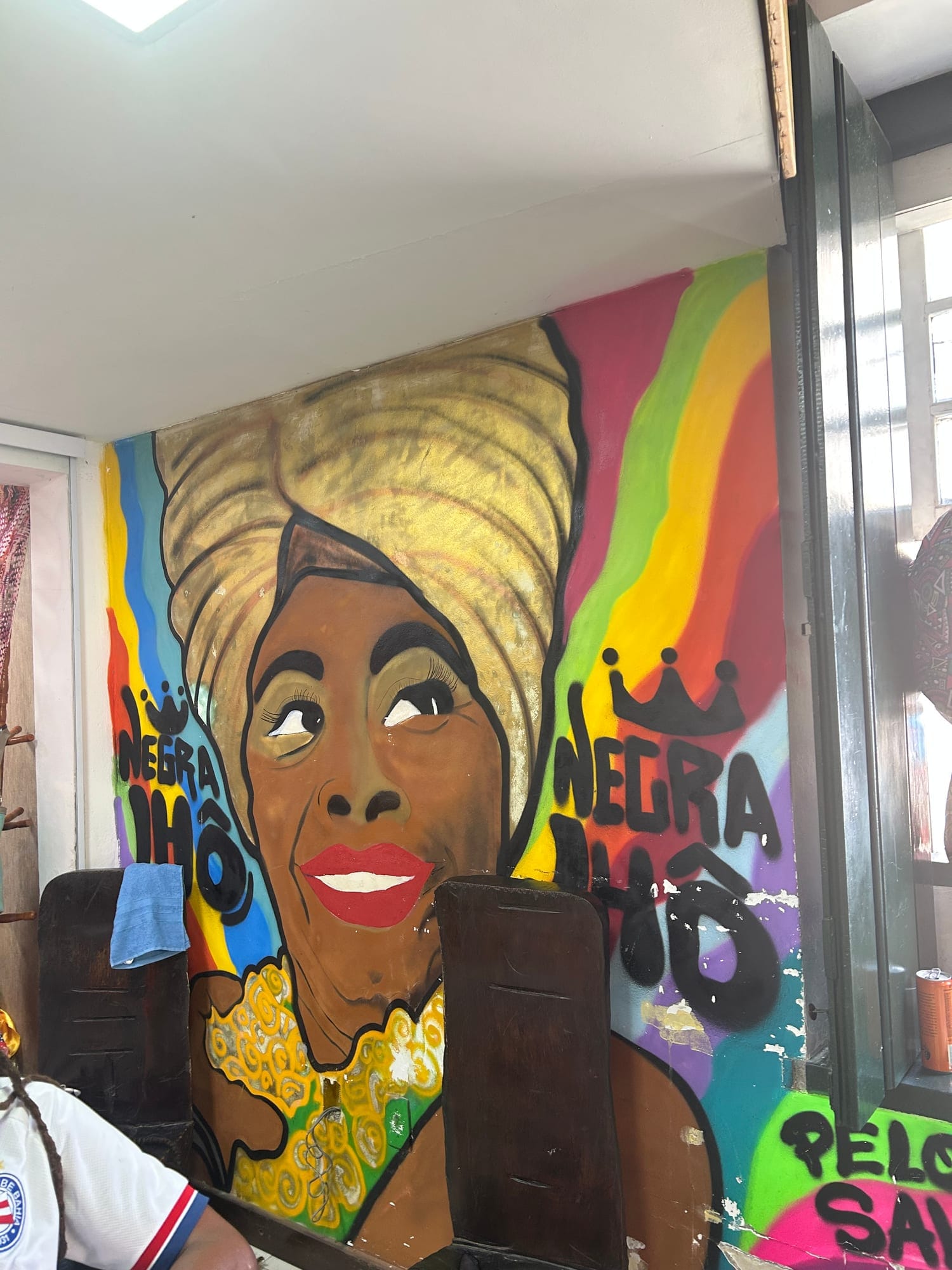
Somewhere between exploring Pelourinho’s streets, we found ourselves at Studio Negra Jhô - Penteados Afro because I had decided I wanted to try Afro braids for the very first time.
Possibly the first and the last time, if I’m being honest. Not everything suits everyone.
What I remember most, however, isn’t my hairstyle; it’s the people. Even though we didn’t speak the same language, we somehow communicated perfectly through smiles, gestures, and a lot of laughter.
The owner, Negra Jhô, has created something much bigger than a beauty salon. It’s a space that celebrates Black identity, empowers women, and promotes anti-racism through beauty, culture, and community. If you ever find yourself in Salvador, don’t be shy and step inside, even if it’s just to experience the atmosphere.
The sunset we almost missed
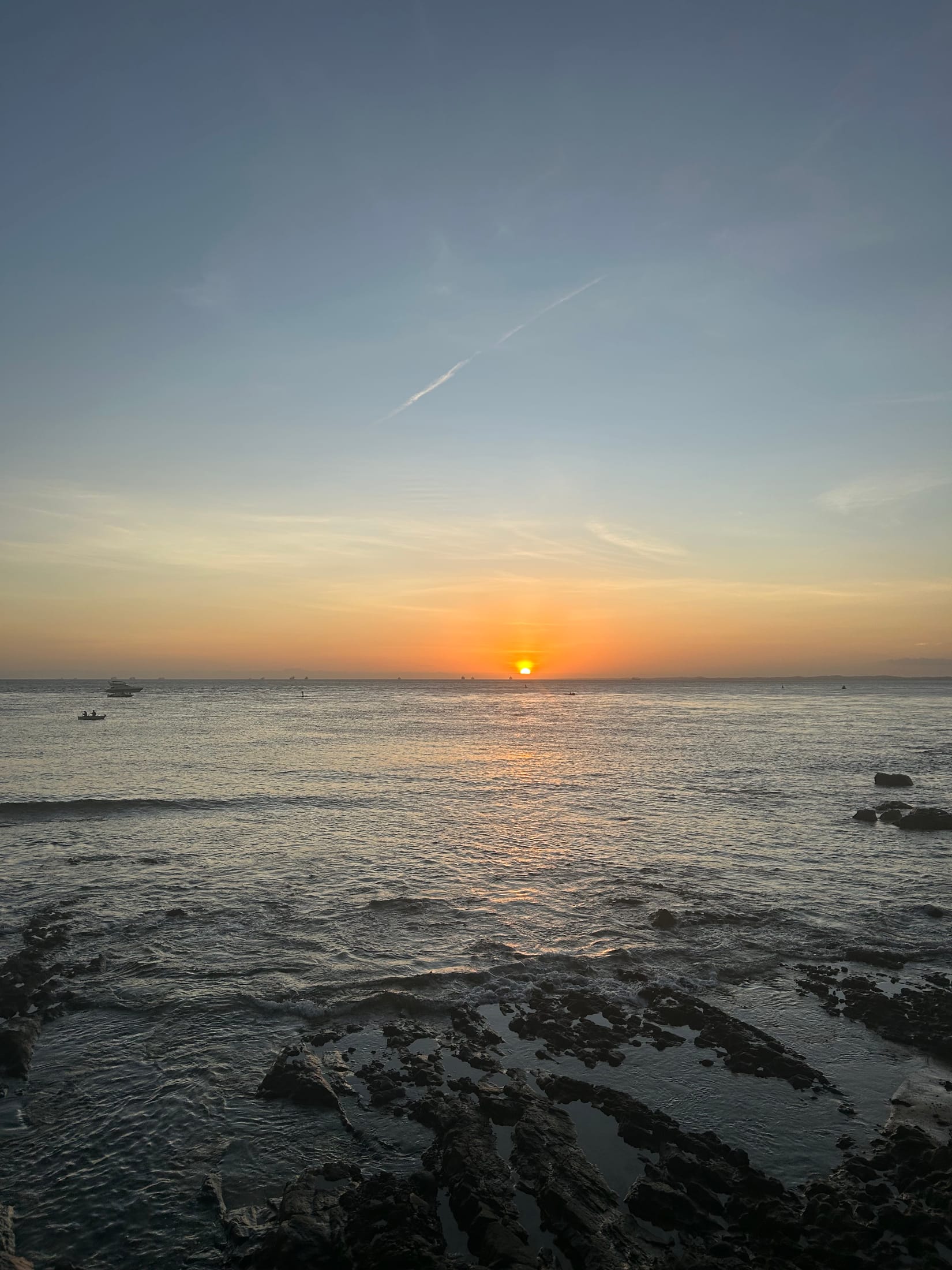
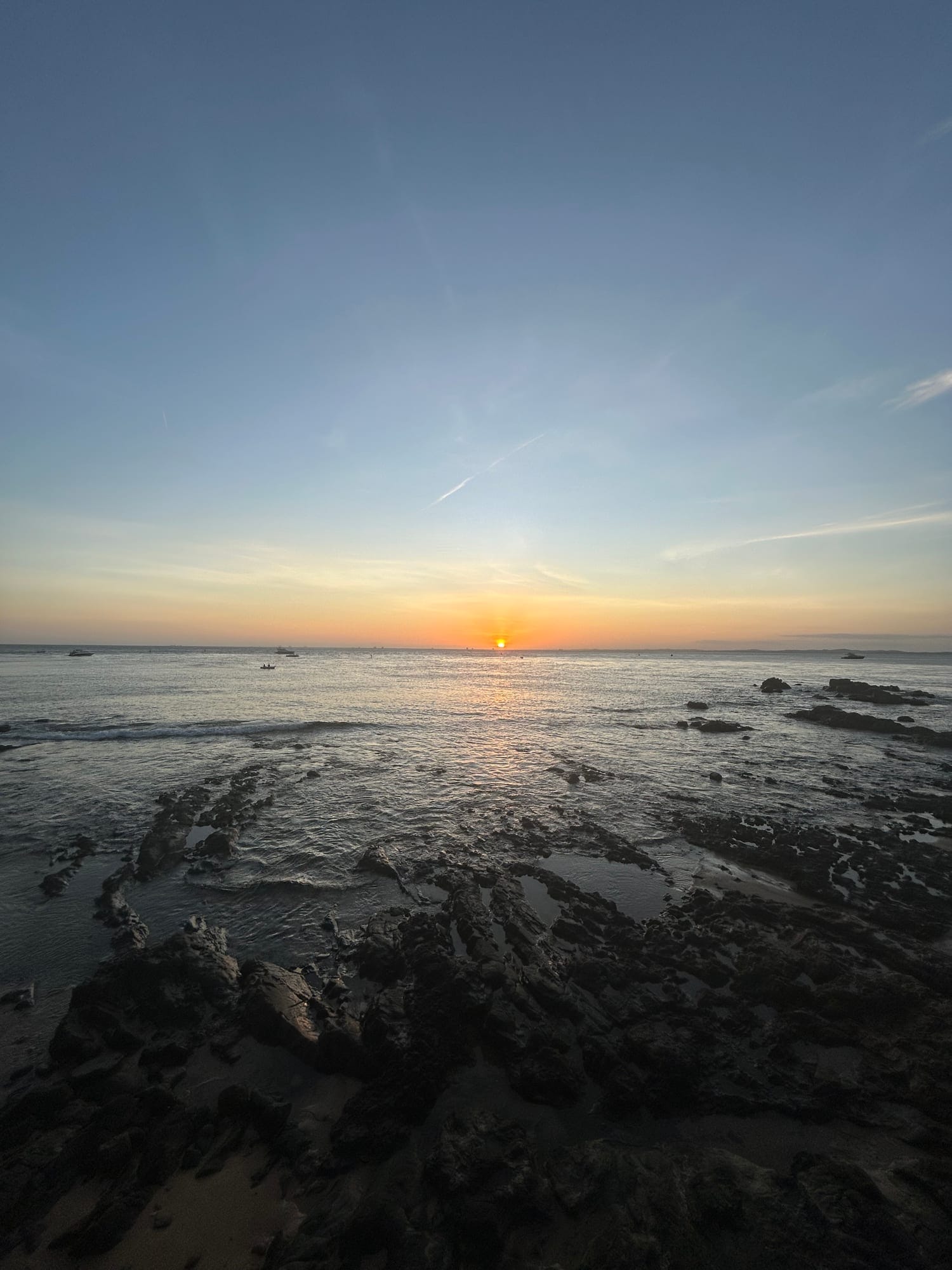
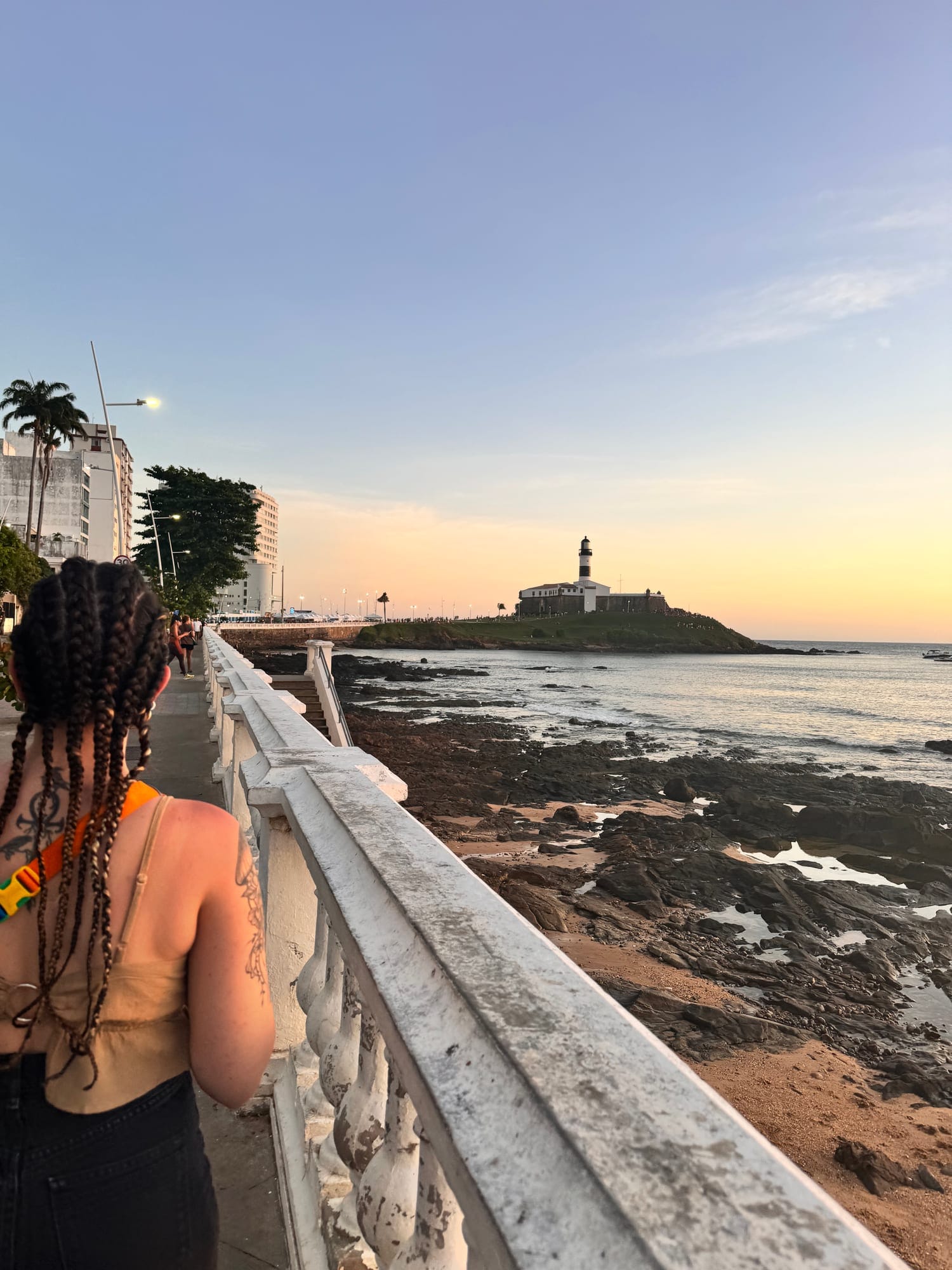
One evening, we headed towards Farol da Barra, one of the city’s most famous places to watch the sunset.
Naturally, as two Greek girls who are almost never ready on time, we were running late.
The sunset caught us halfway there.
And honestly? I think we enjoyed it even more that way.
From a distance, we could already see crowds gathering around the lighthouse. Instead, we found a quieter spot along the way and watched the sky slowly change colour without fighting for the perfect view. Sometimes the best travel moments are the ones that don’t go according to plan.
The little moments that stay with you
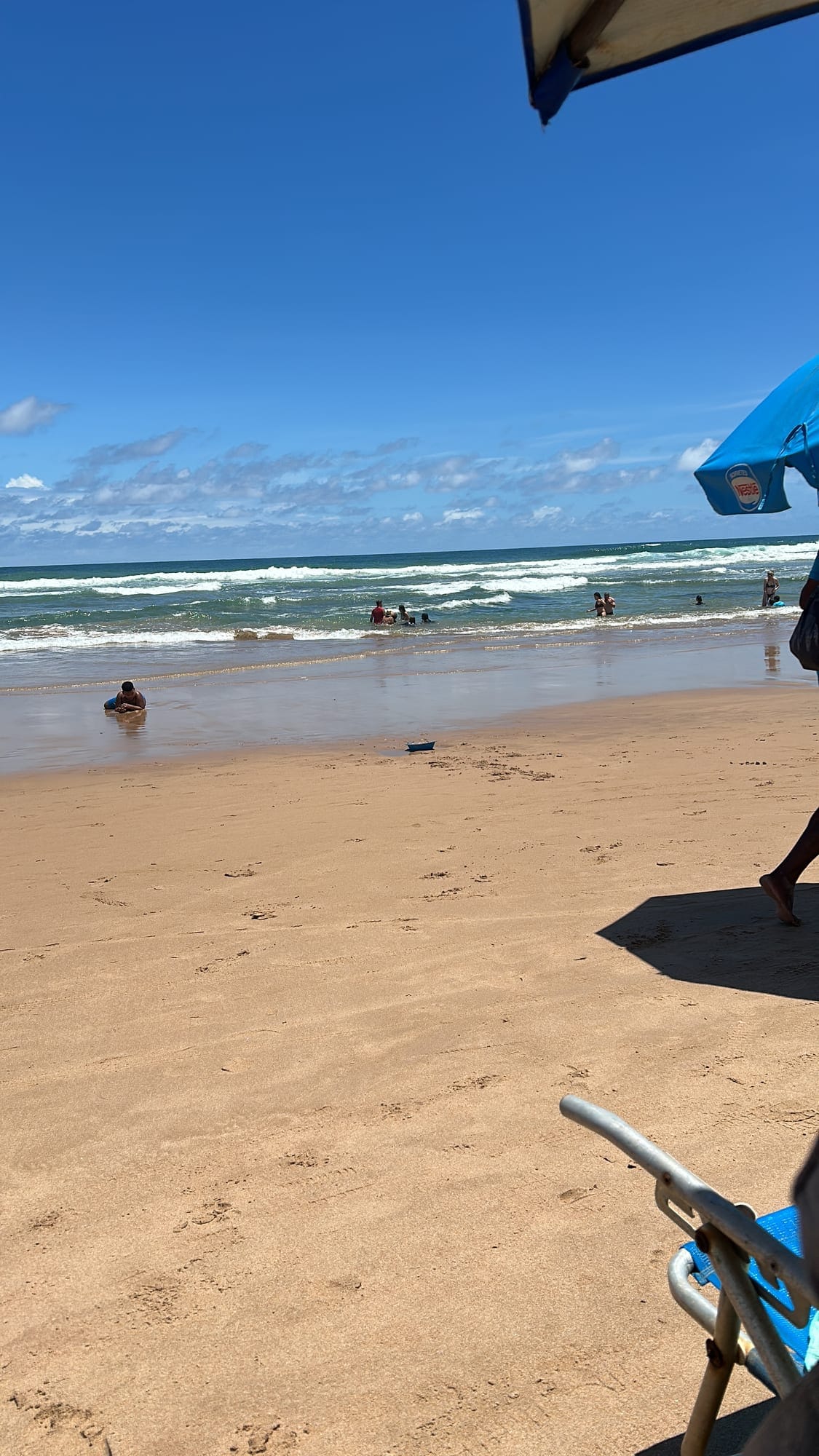
Long walks along Porto da Barra, late-night drinks, a few spontaneous samba dances, and little adventures in nearby neighbourhoods were all part of our Salvador experience too.
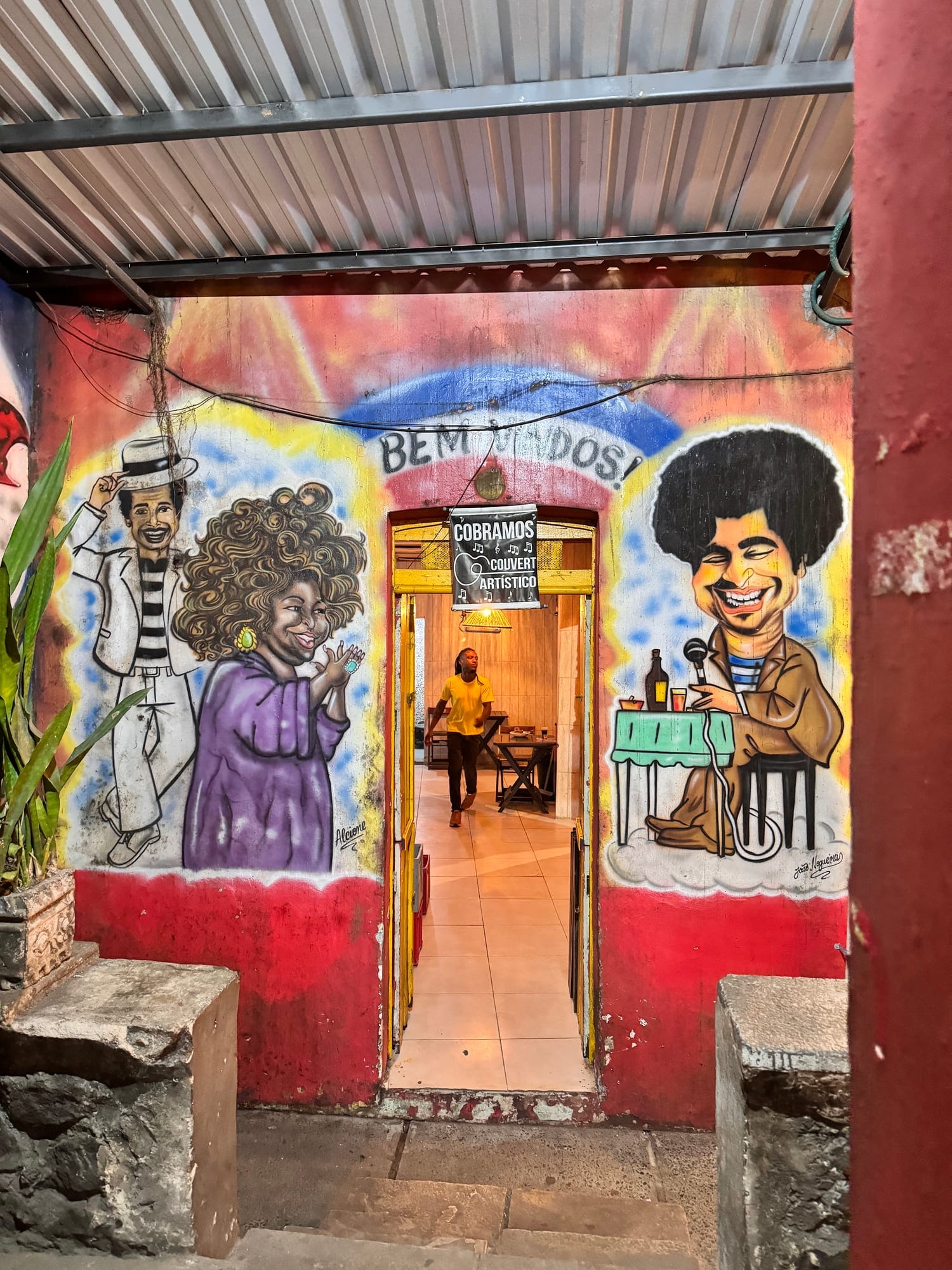
I’m not going to tell you every single story. Some moments are simply meant to be lived rather than explained, and not everything needs to become a travel guide.
That was Salvador for us.
A city full of colour, rhythm, incredibly warm people, and an energy that’s almost impossible to put into words.
And if you ask me… I would go back in a heartbeat.