Rio de Janeiro, Brazil · Part 1
Rio de Janeiro: The city you didn’t know you needed to visit - Part 1
29 September 2026
If you’ve already read my two-part story about Salvador, you’ll know that Rio wasn’t actually our first stop in Brazil.
If you haven’t read it yet… what are you doing here?
Go back and read it first. I’ll wait.
After a few days in Salvador, we took a domestic flight to Rio de Janeiro. The flight was around two and a half hours, and, once again, the language situation was… interesting. Not many people spoke English, so we mostly survived thanks to Emmy’s Italian, a little Spanish, and the two or three Portuguese words we had managed to learn.
Somehow, we made it work.
Copacabana, our new home
We stayed in Copacabana at the Ritz Copacabana Hotel, in one of the most tourist-friendly yet convenient areas for travelers. The hotel was just steps away from the beach, offered an excellent breakfast, and served as an ideal base for exploring the city.
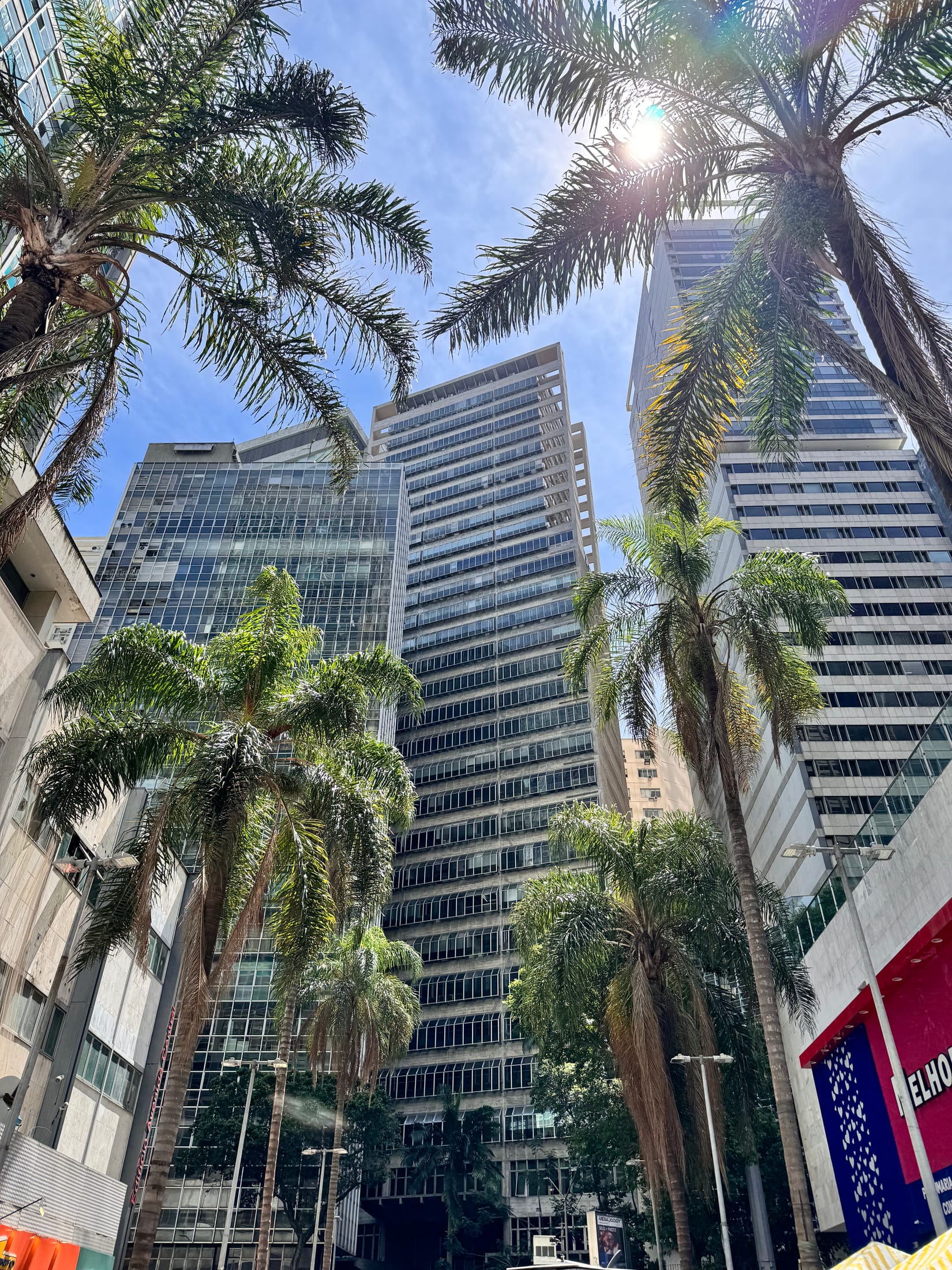
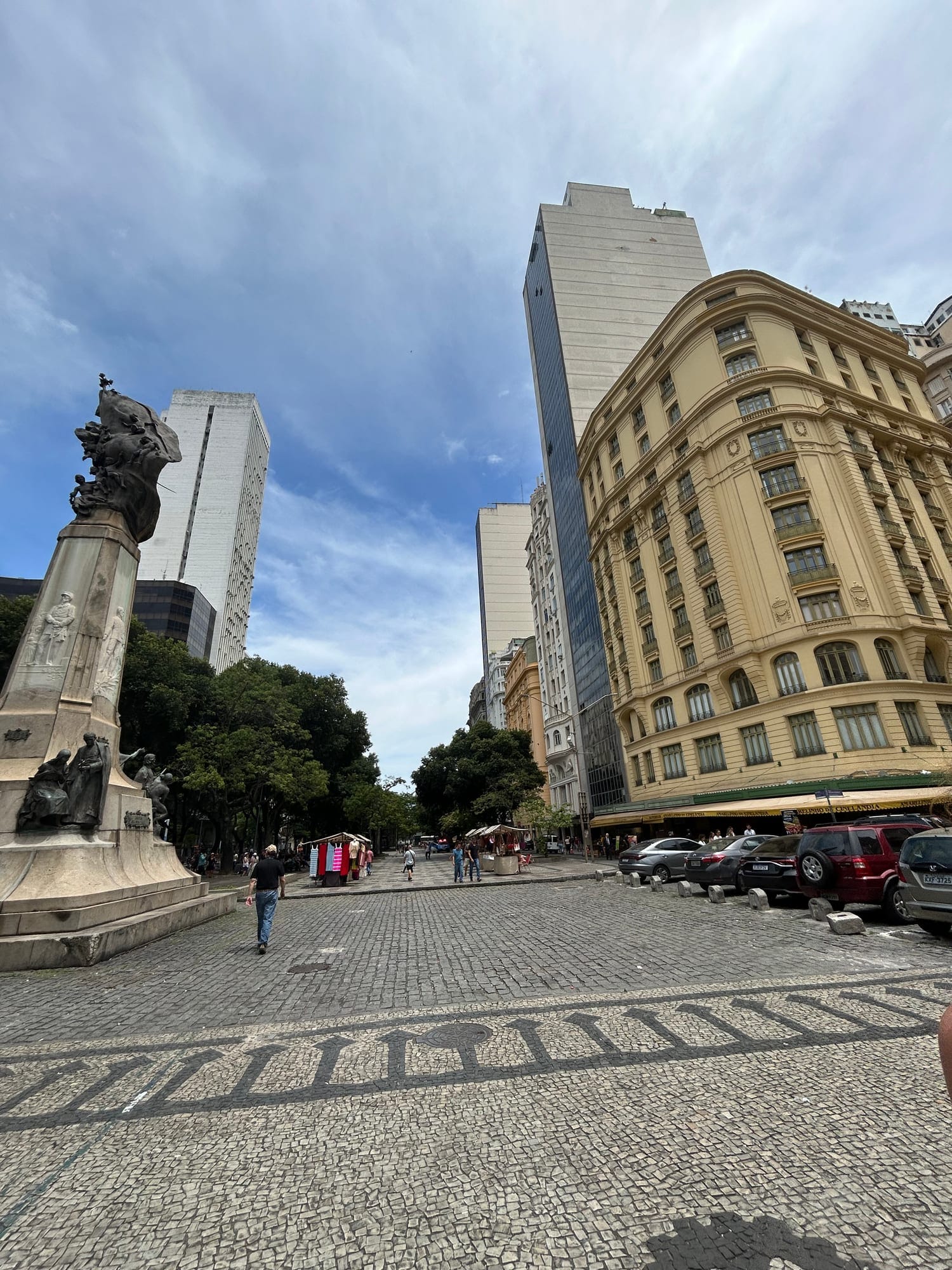
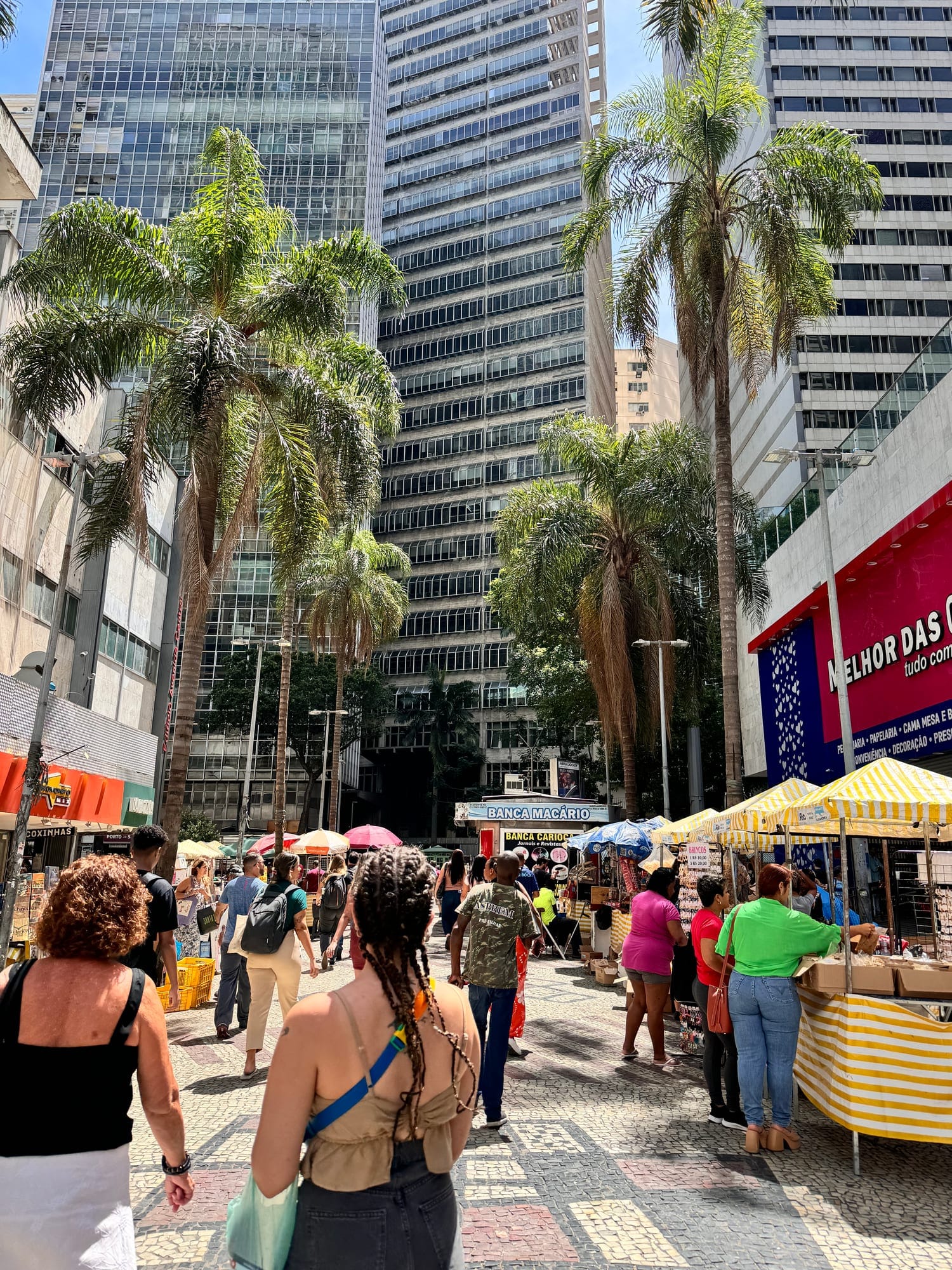
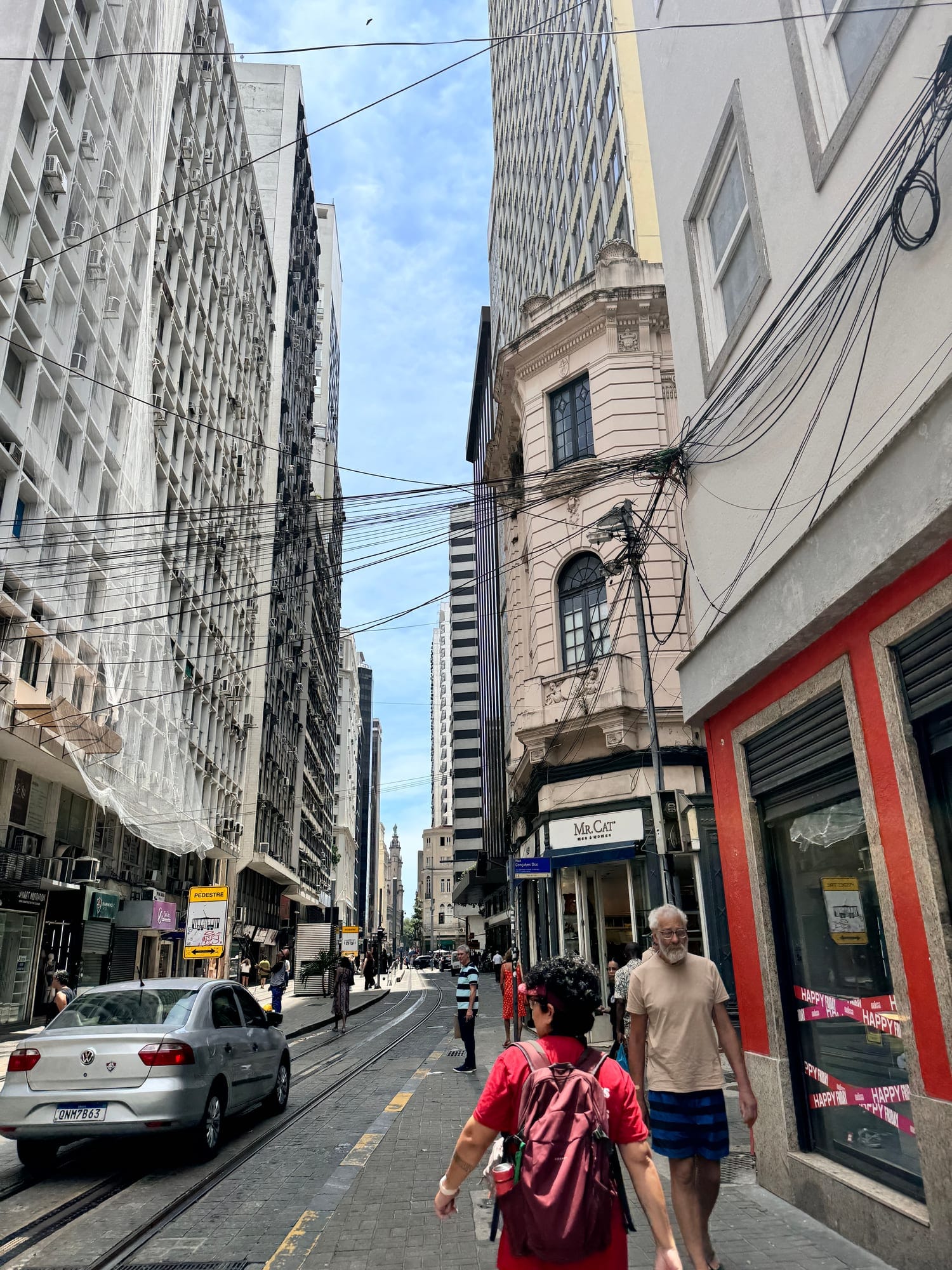
The first thing that struck me was how different Rio was from Salvador. Tall buildings, skyscrapers, vast avenues, and a much faster pace of life. Ιt was as if we had traveled to a different country.
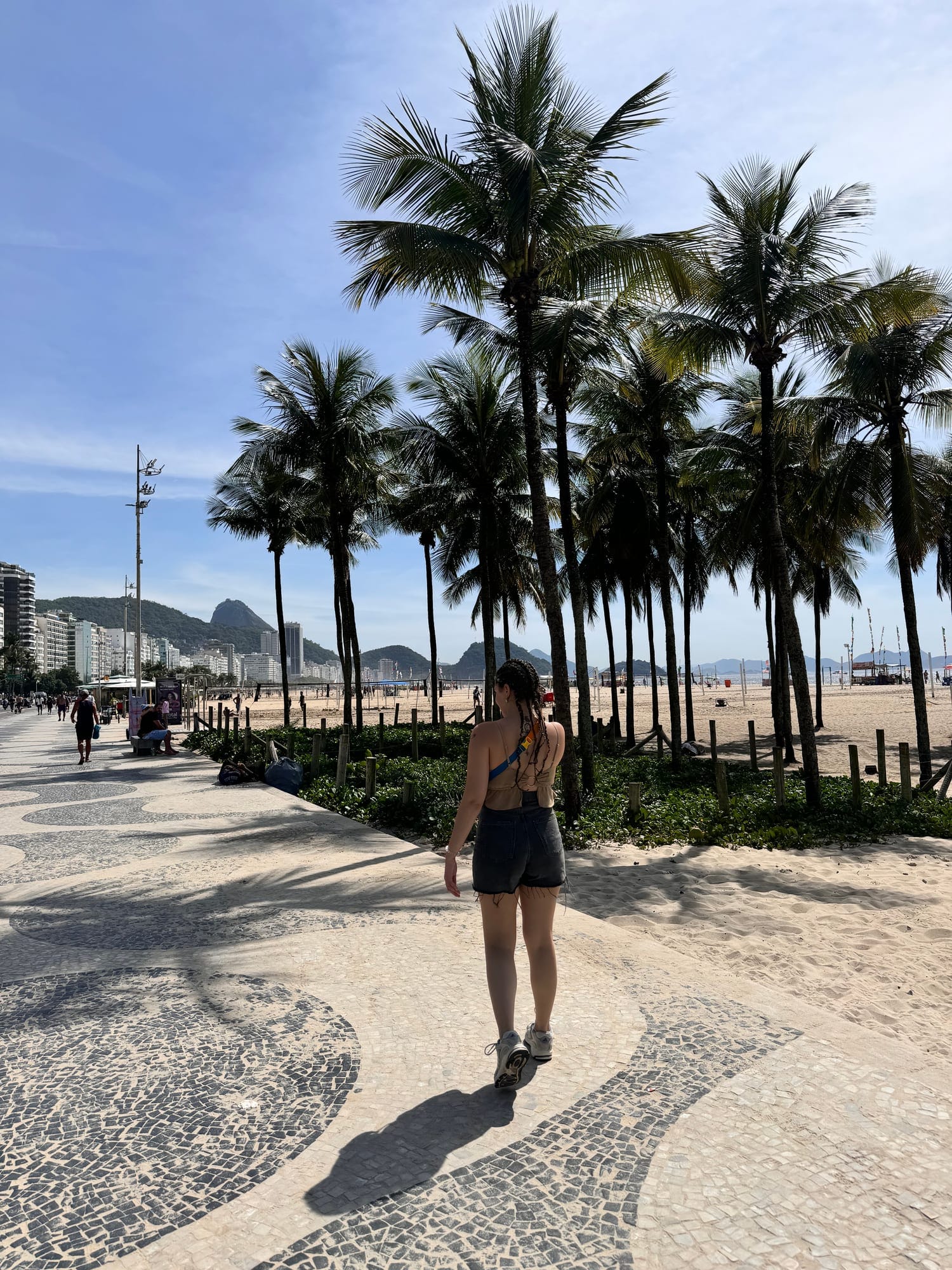
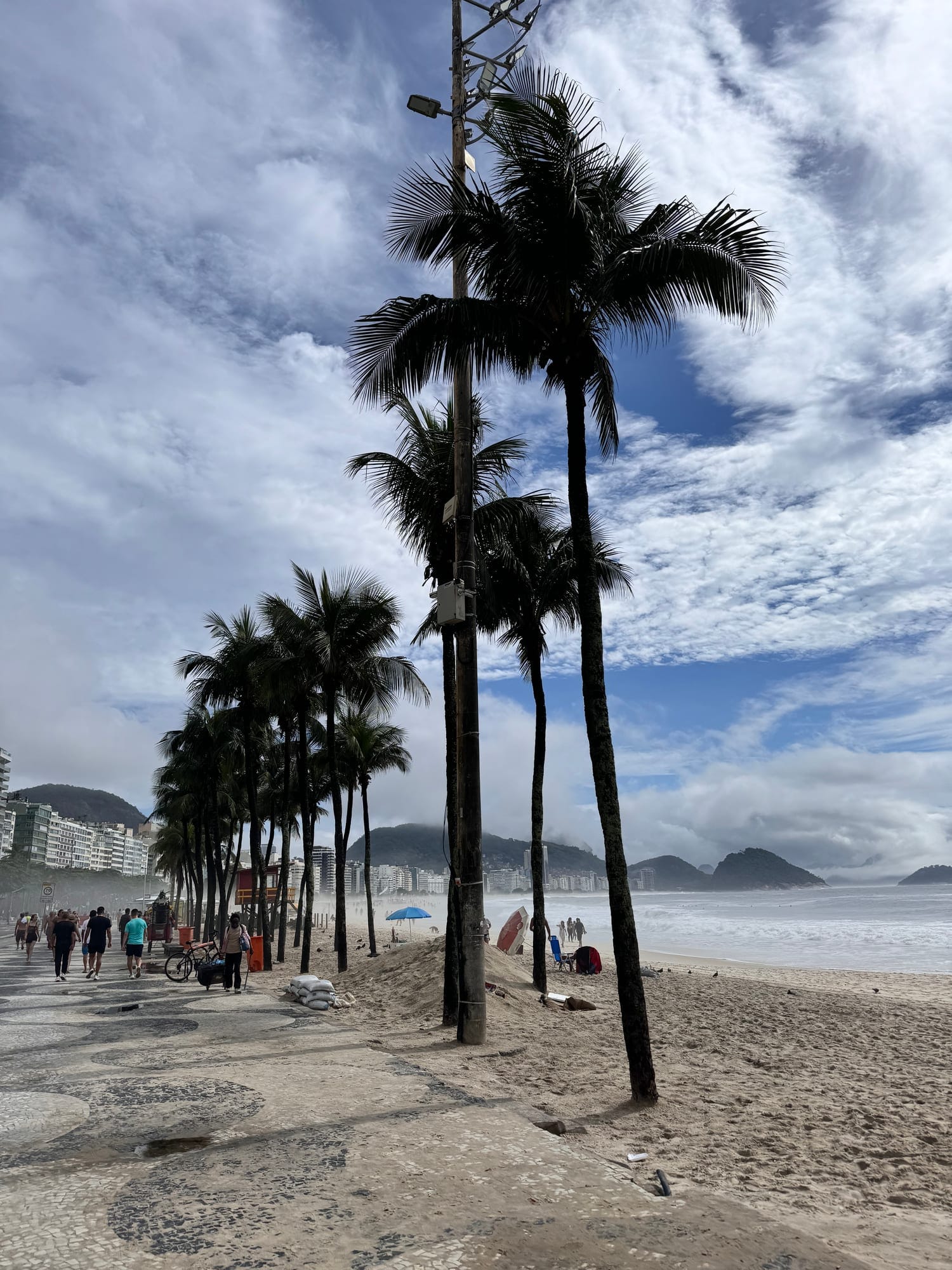
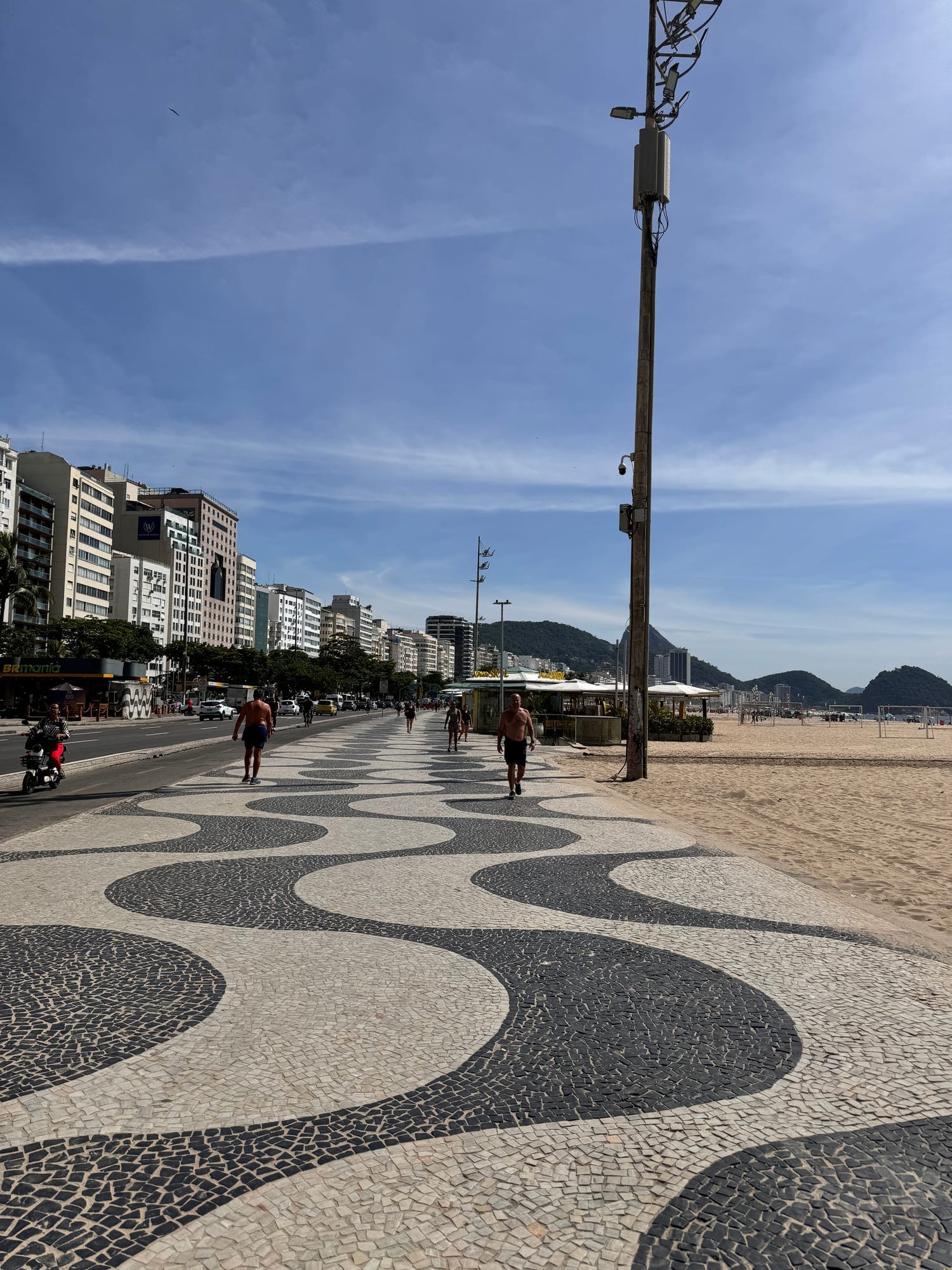
Walking tour, again and again
On our first day, we explored the city on foot and joined a walking tour. The group was much bigger than the one we had in Salvador, and the tour lasted several hours.
I honestly believe it is the best way to get to know a destination. You don’t just see the sights; you hear stories you would hardly discover on your own.
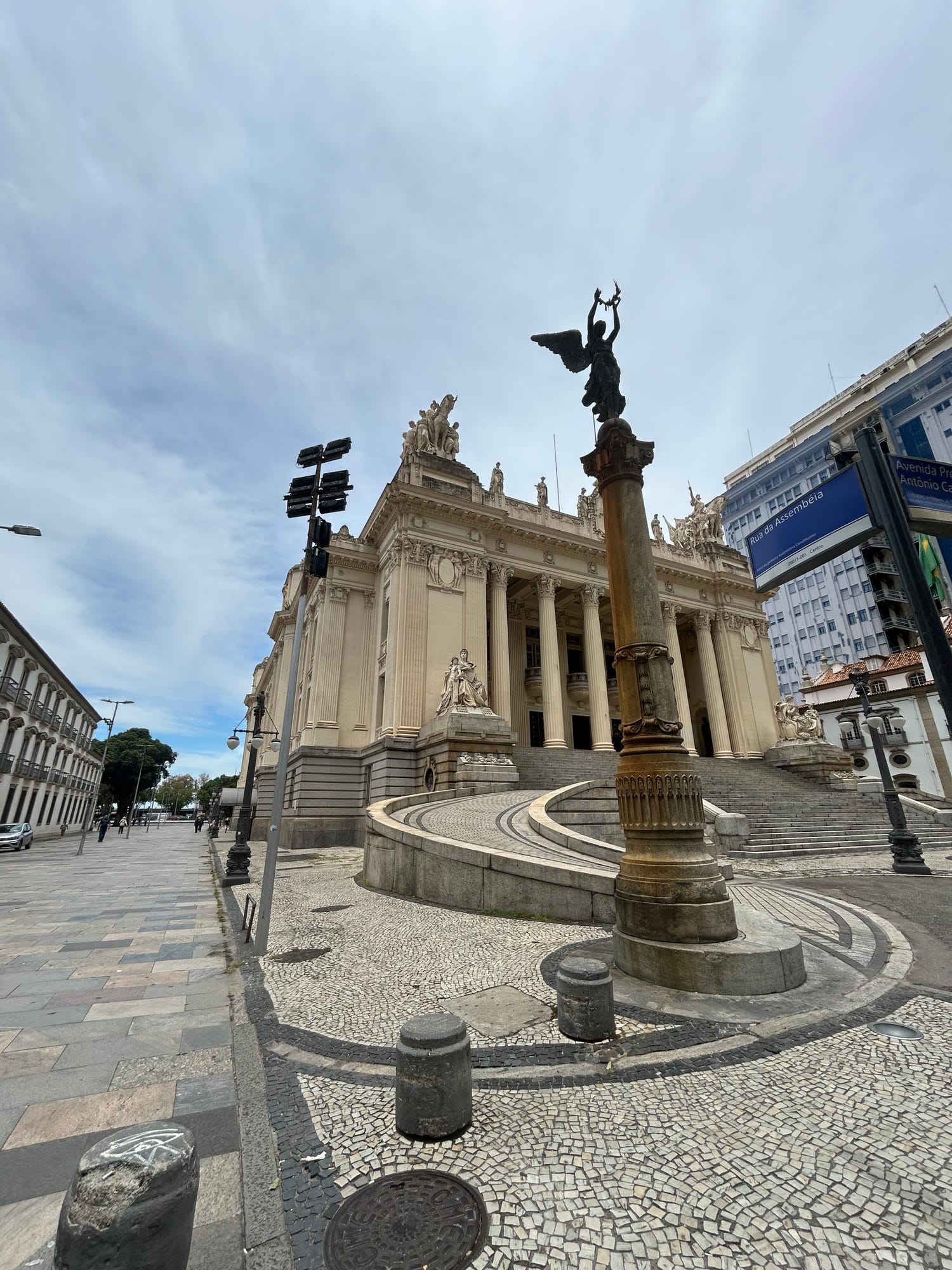
Confeitaria Colombo
Our first stop was Confeitaria Colombo, one of the city’s most famous historic cafés. The interior is beautiful, and the place has a long history as a meeting point for Brazilian writers, artists, and intellectuals.
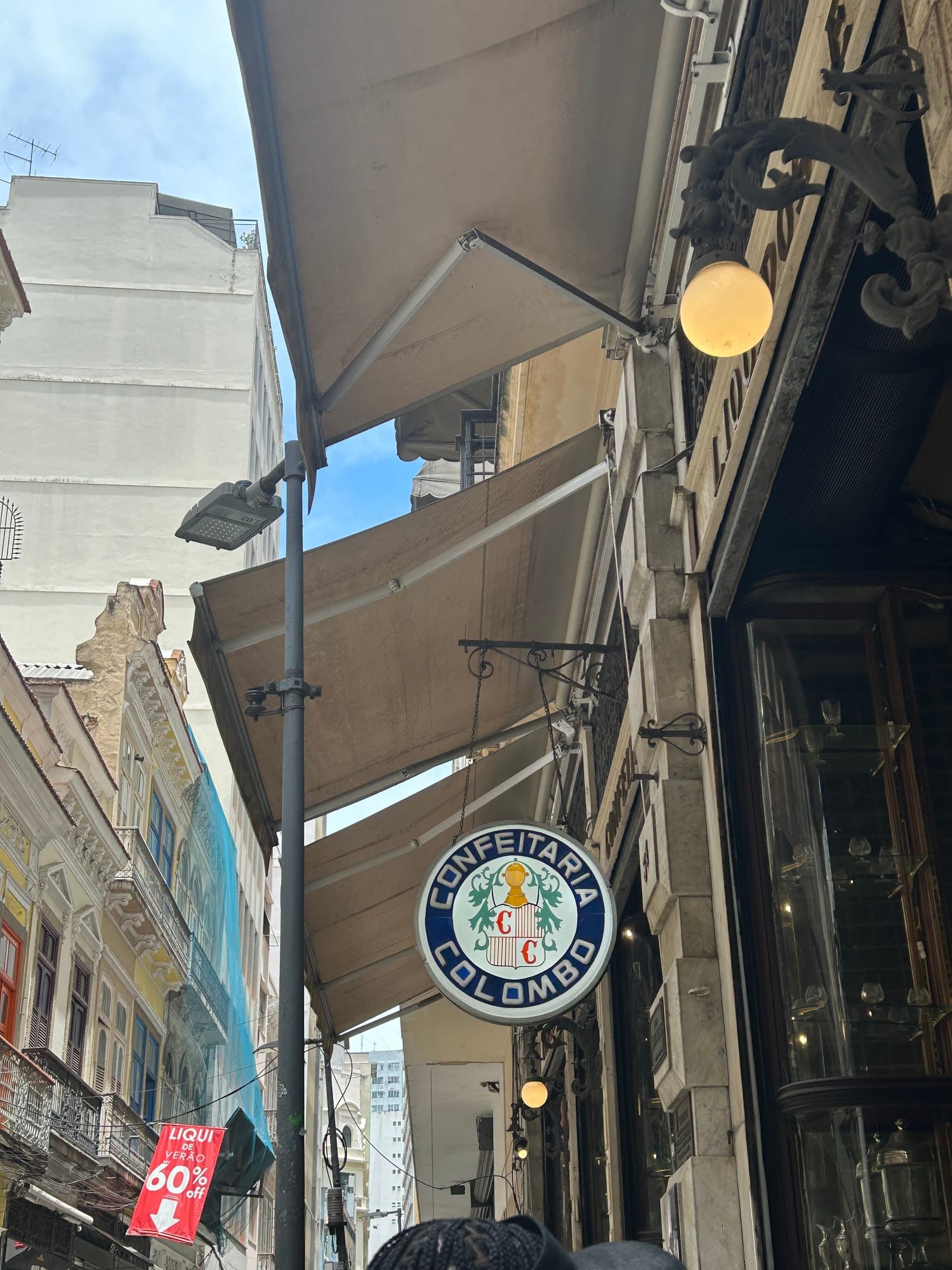
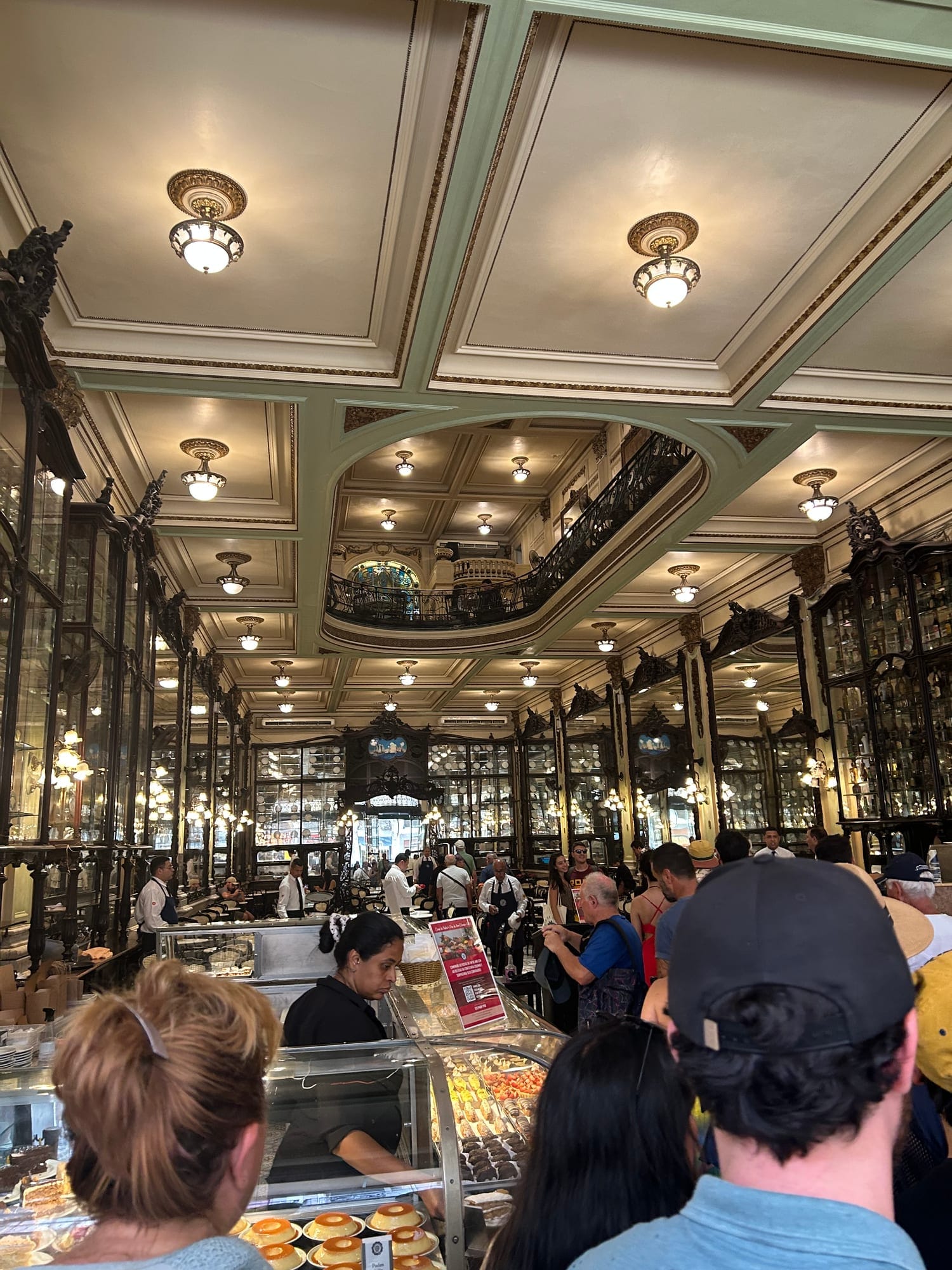
It was quite busy when we visited, so we mostly walked around and admired the inside. We told ourselves we would come back later and actually sit down for something.
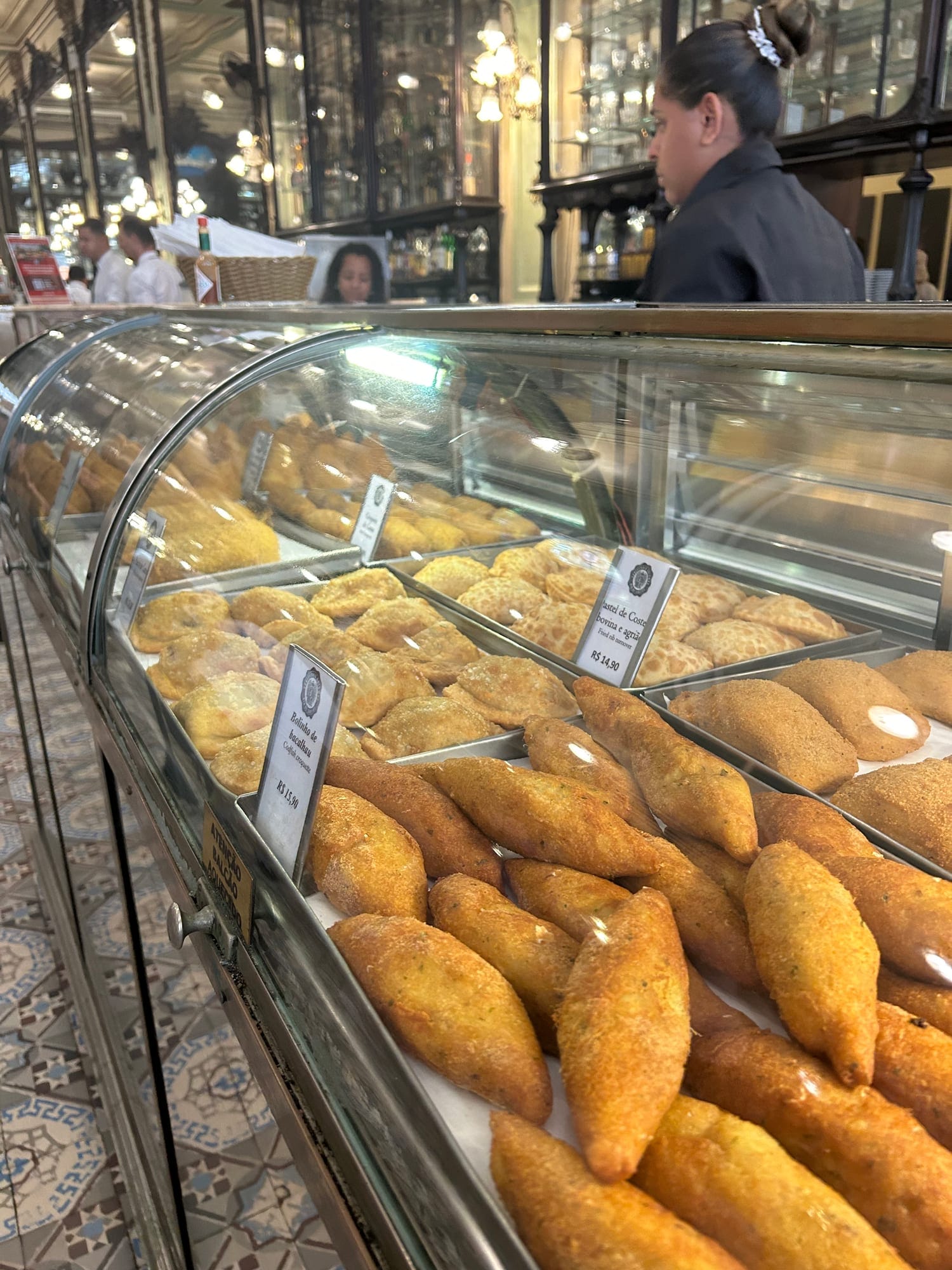
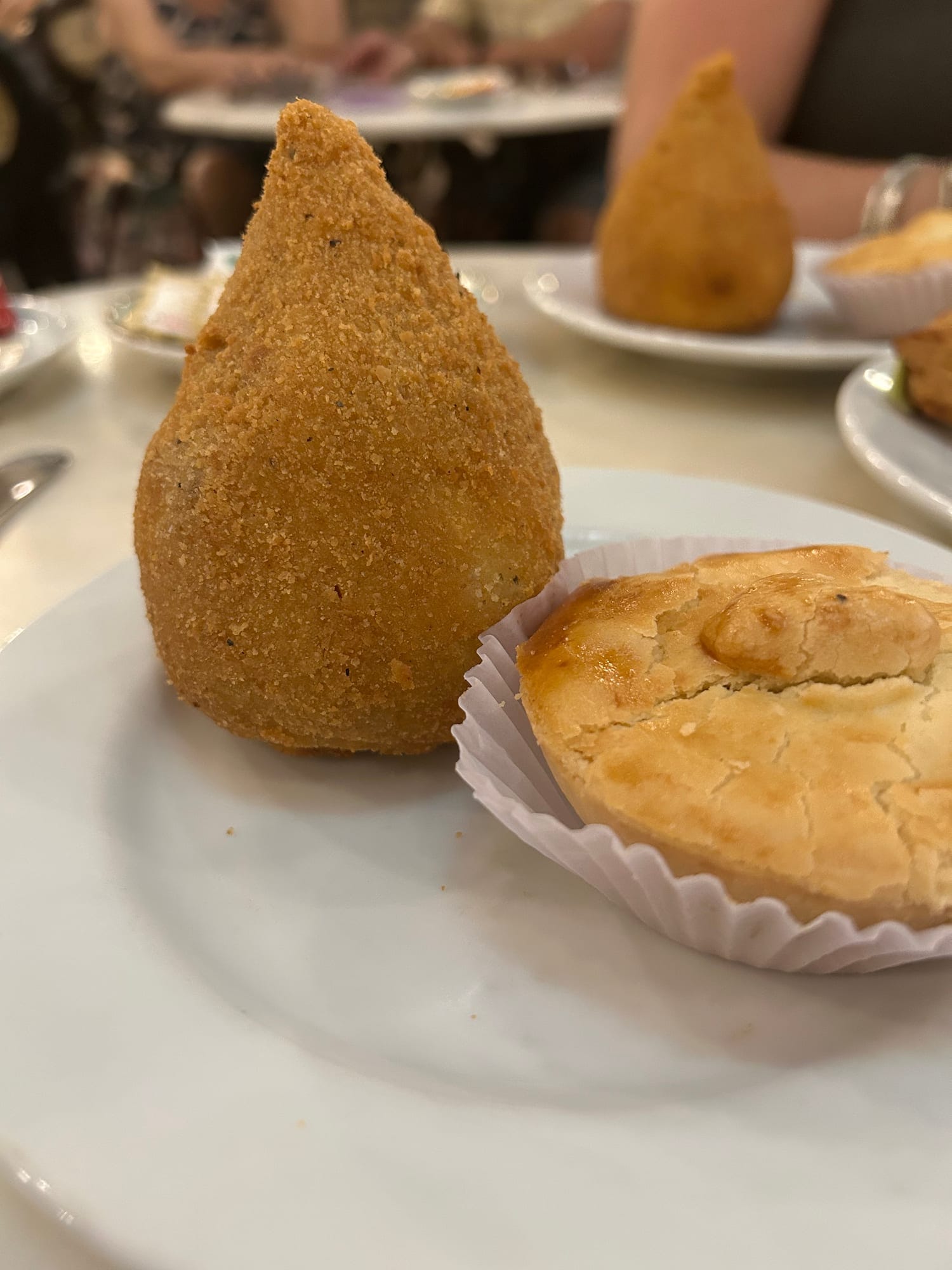
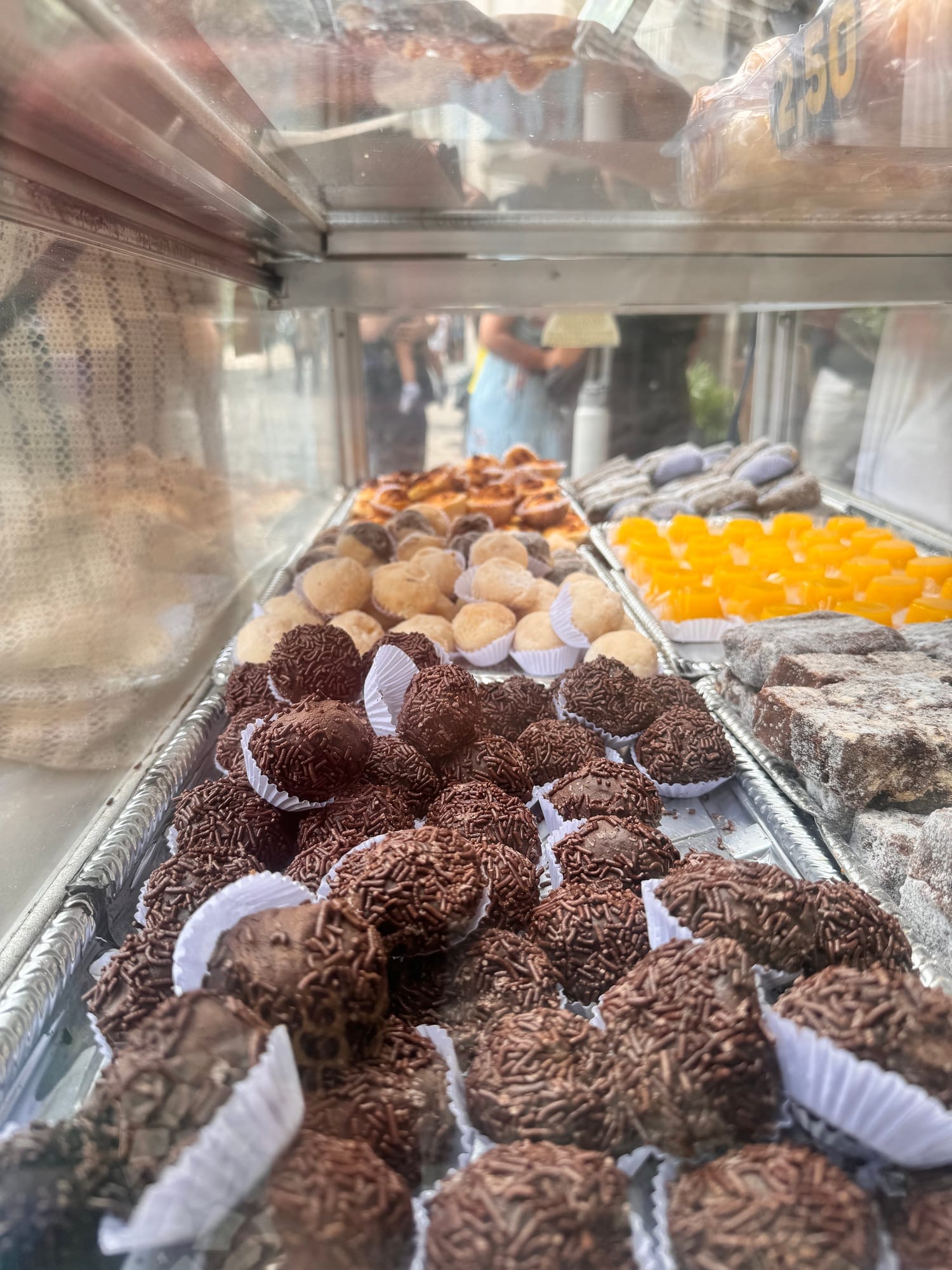
And yes, if you visit, try some of the traditional sweets and snacks, especially Bolinho, Coxinha, and Brigadeiro.
Escadaria Selarón
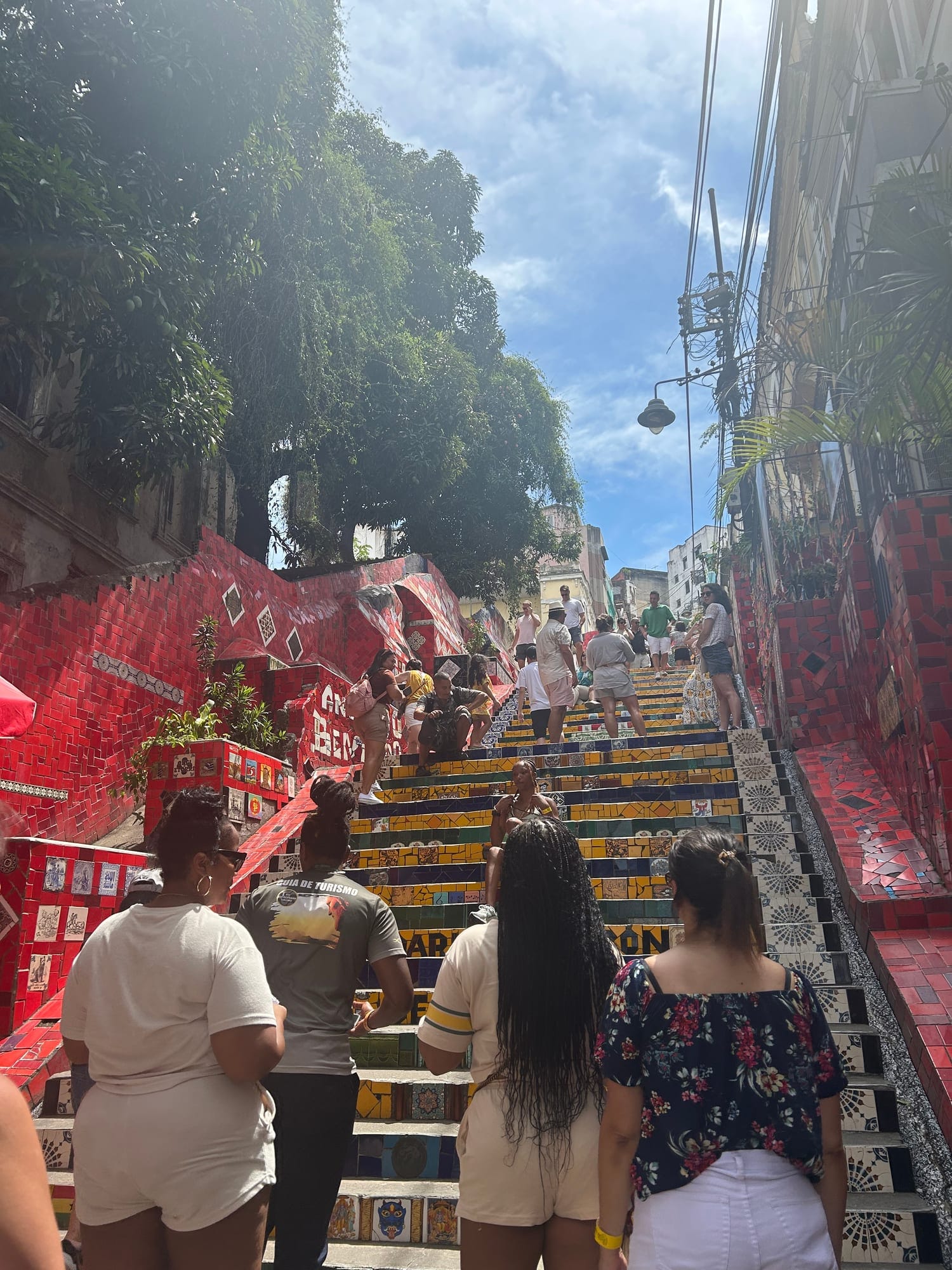
Next stop: Escadaria Selarón.
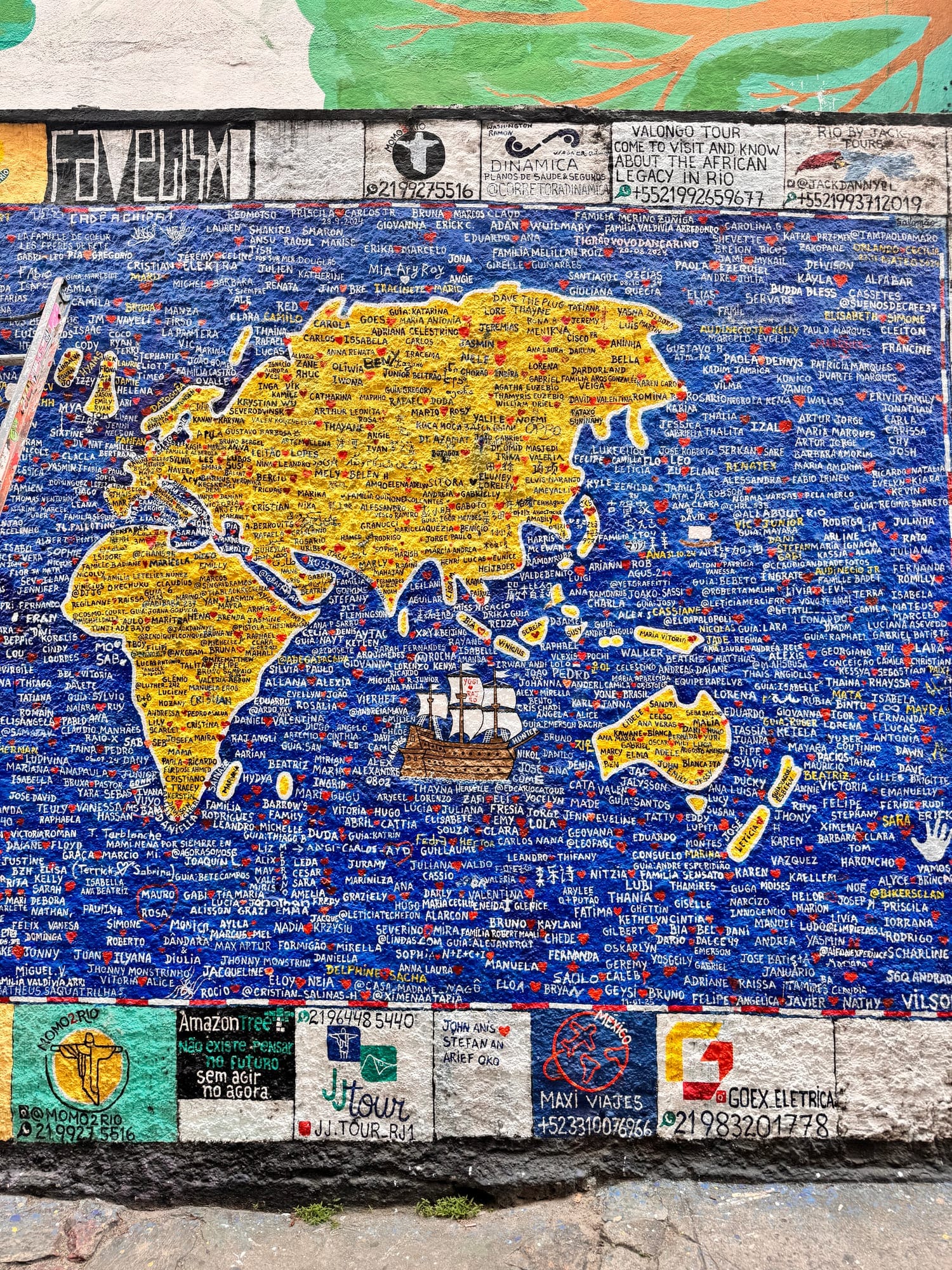
If you’ve ever seen colourful photos of Rio with a staircase covered in thousands of different tiles, this is probably the place. The staircase connects Lapa and Santa Teresa and is covered with more than 2.000 tiles from countries all over the world.
I’ll be honest: it’s very touristy. The crowds take away a bit of the magic, but if you’re in Rio, it’s worth a visit. After all… I’m saying this as just another tourist who waited patiently to take a photo.
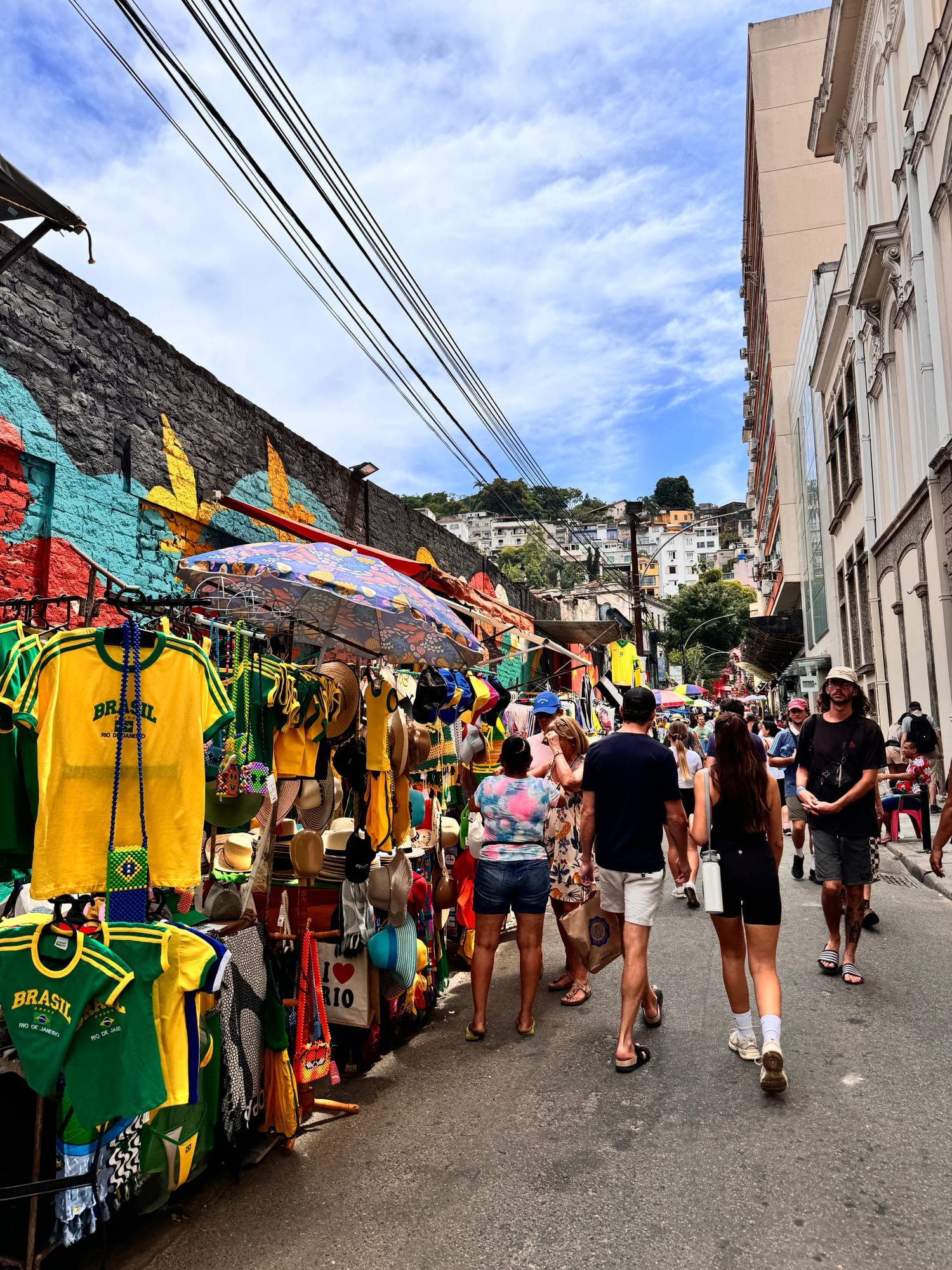
Around the staircase, you’ll also find small tourist shops, street food and places to grab a drink, so you can easily spend a little more time exploring the area.
The cathedral that looks like a pyramid
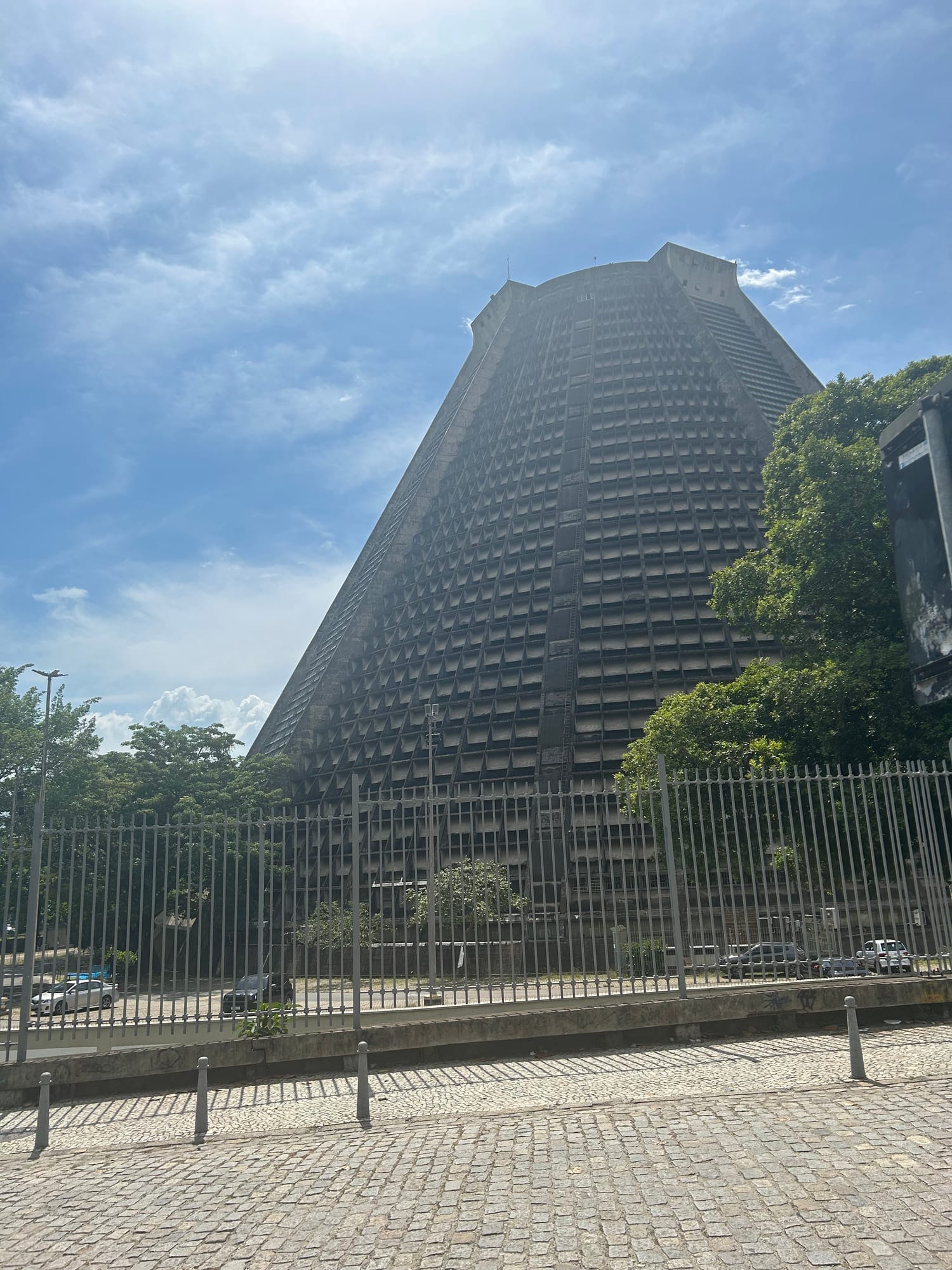
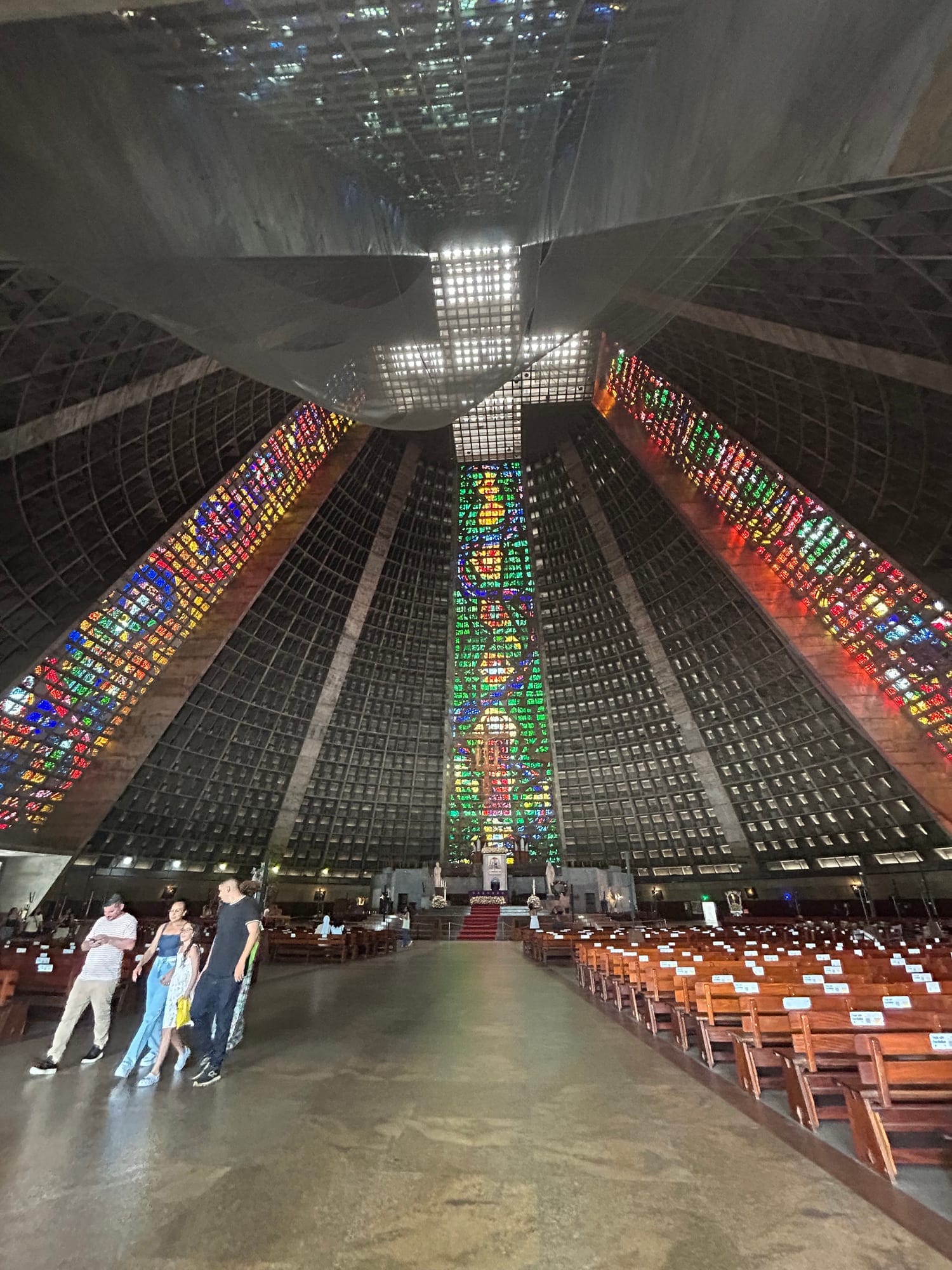
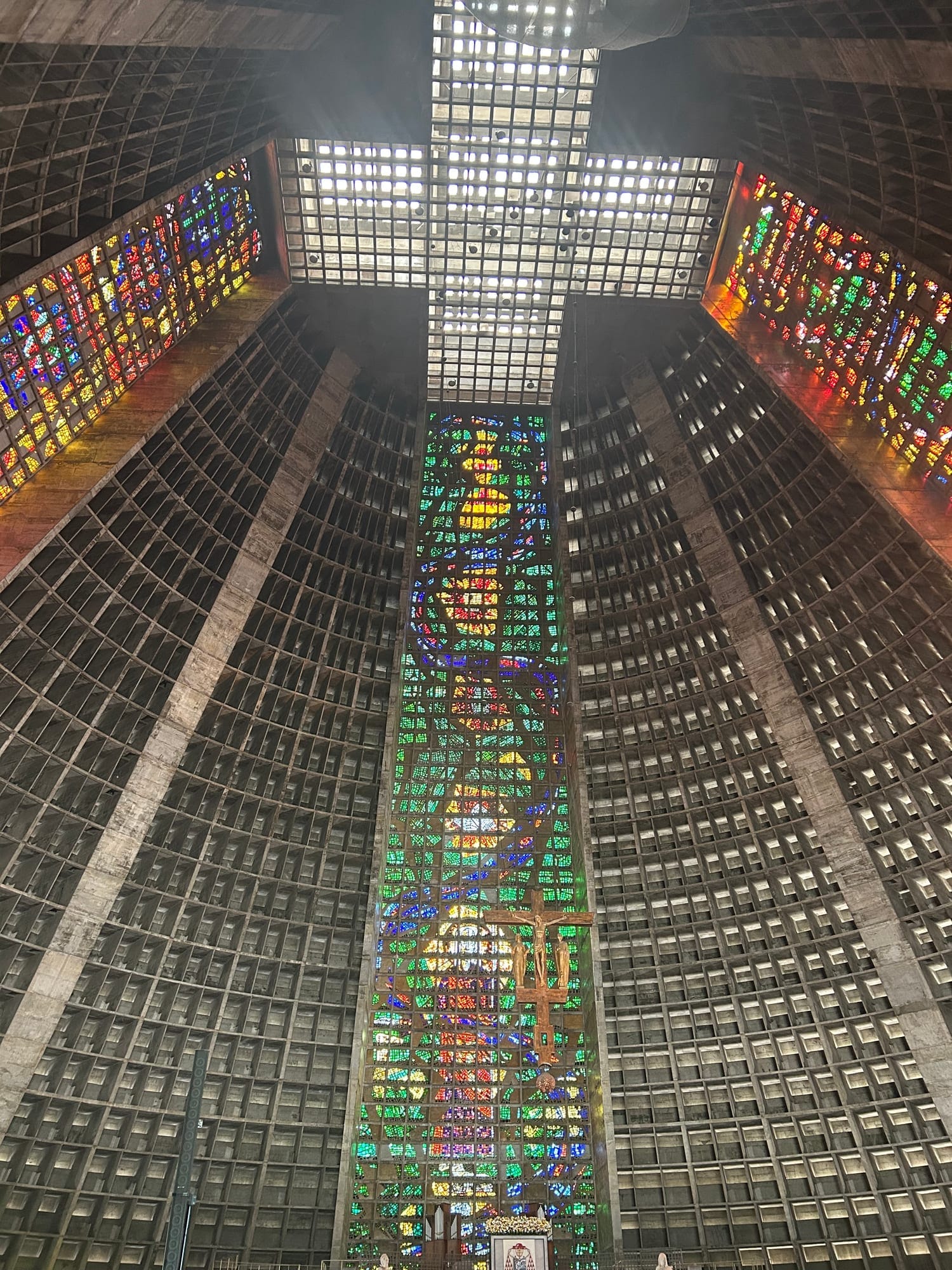
While walking through the city, we spotted a massive building in the distance that looked more like a pyramid than a church. Curiosity got the better of us, and we headed towards it.
That is how we discovered the Metropolitan Cathedral of Saint Sebastian.
Its exterior is unlike any other cathedral I have ever seen, but the interior is truly impressive. Huge, colorful bands of light streaming through the stained glass create an almost magical atmosphere.
For us, it also offered a welcome respite from the city’s unbearable heat.
Sugarloaf Mountain
We spent the afternoon at one of Brazil’s most iconic landmarks: Sugarloaf Mountain.
We had booked our tickets online and chose the skip-the-line option, a choice that was truly worth it, as the queues were enormous.
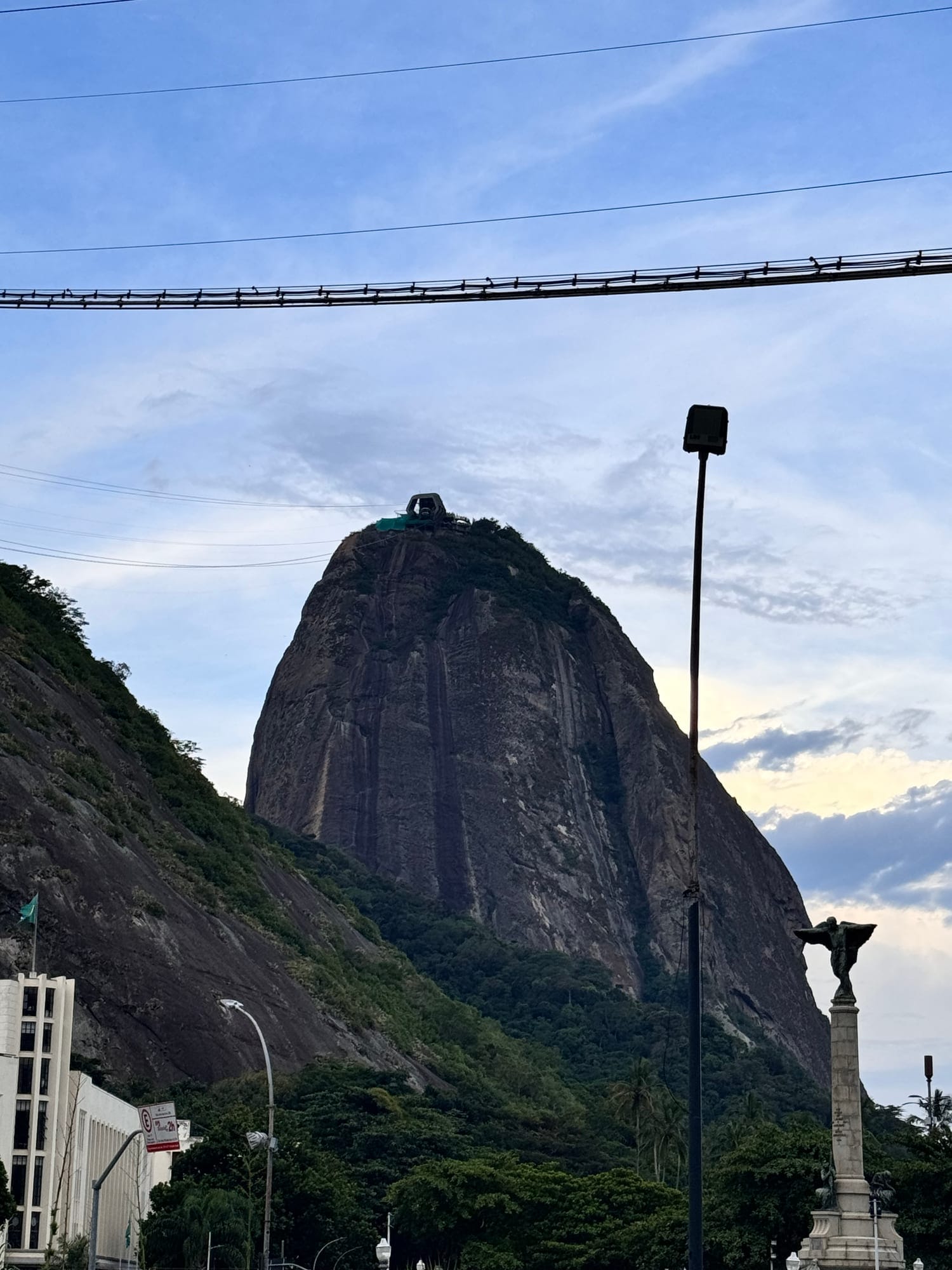
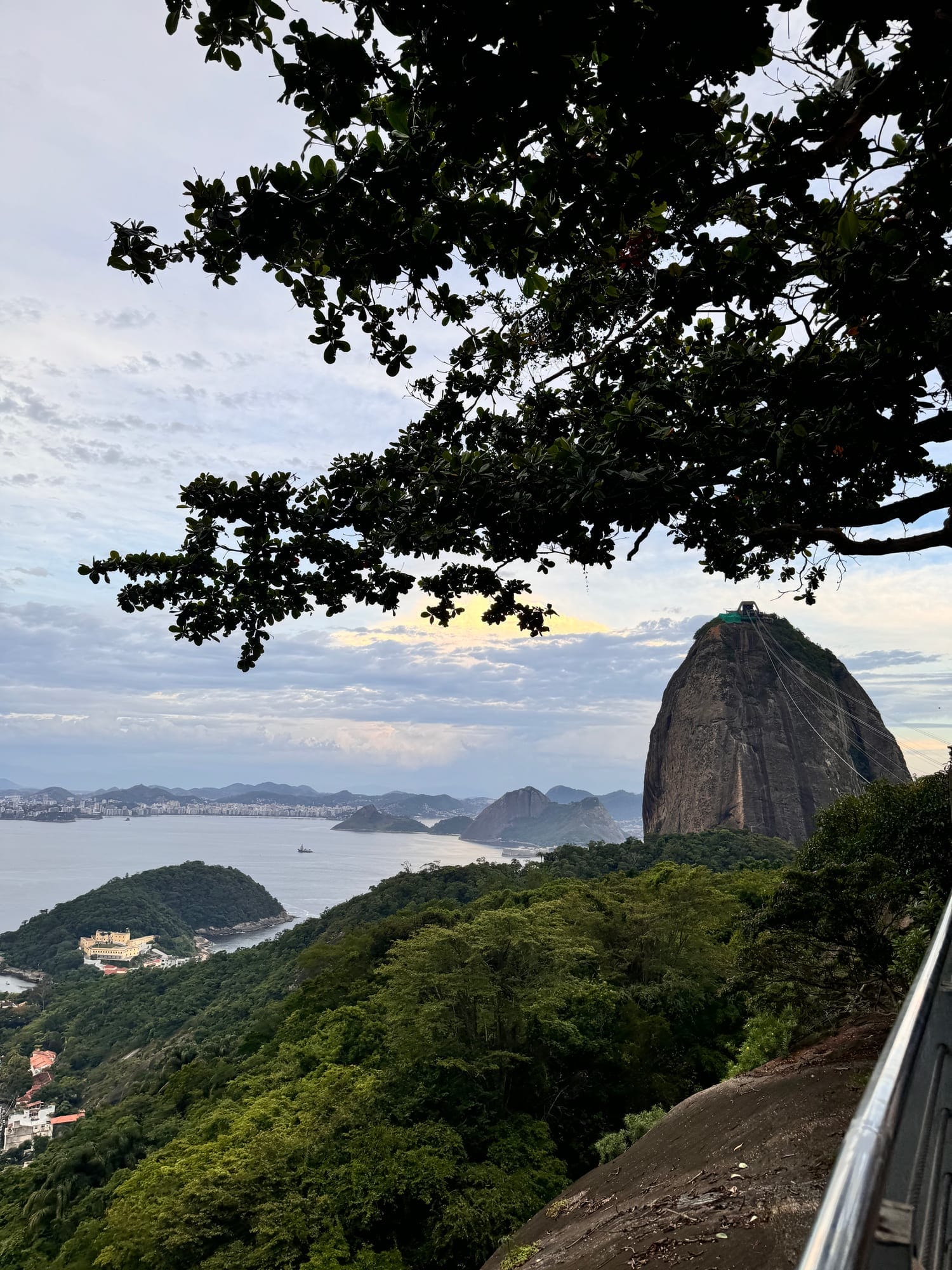
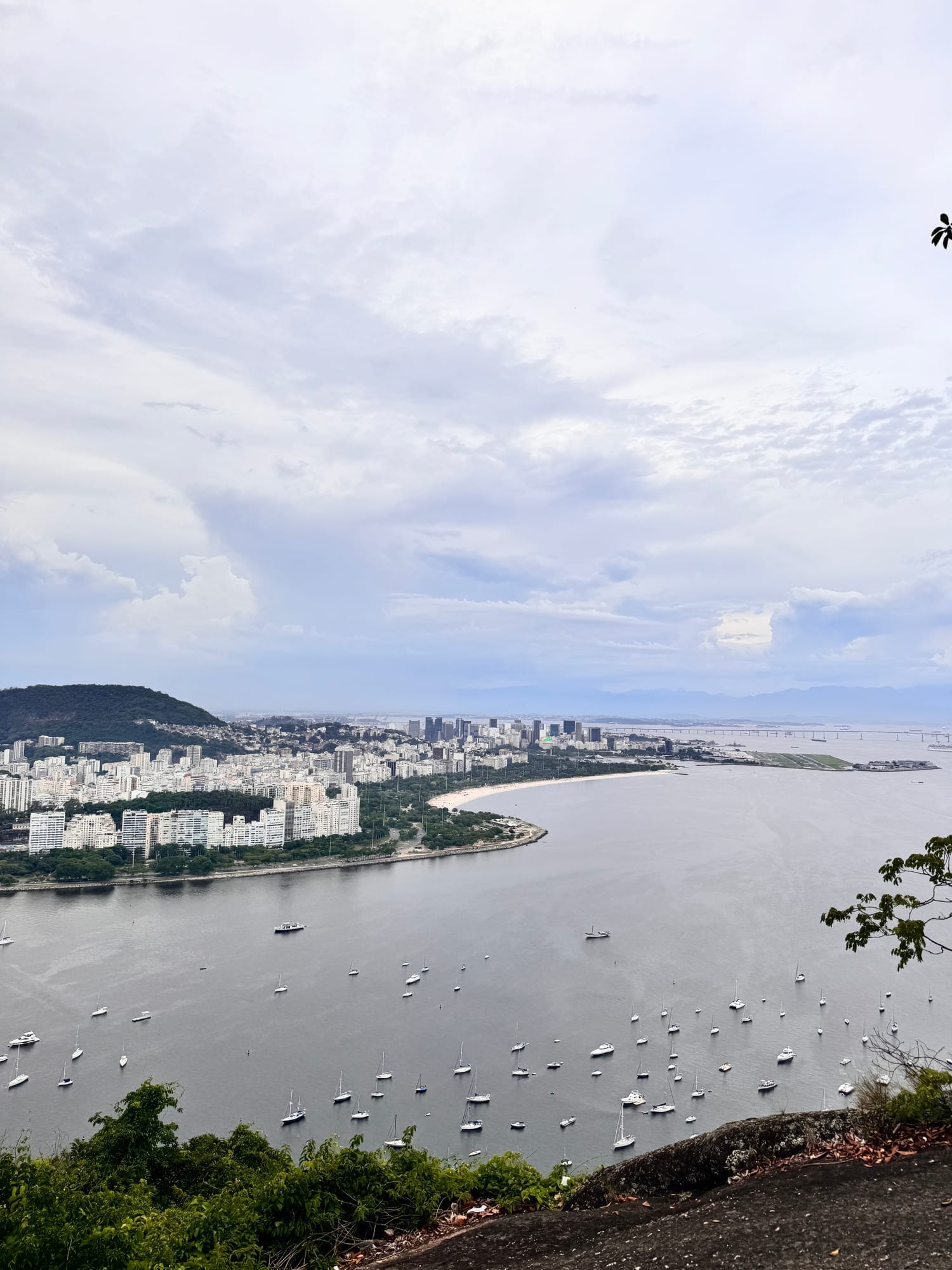
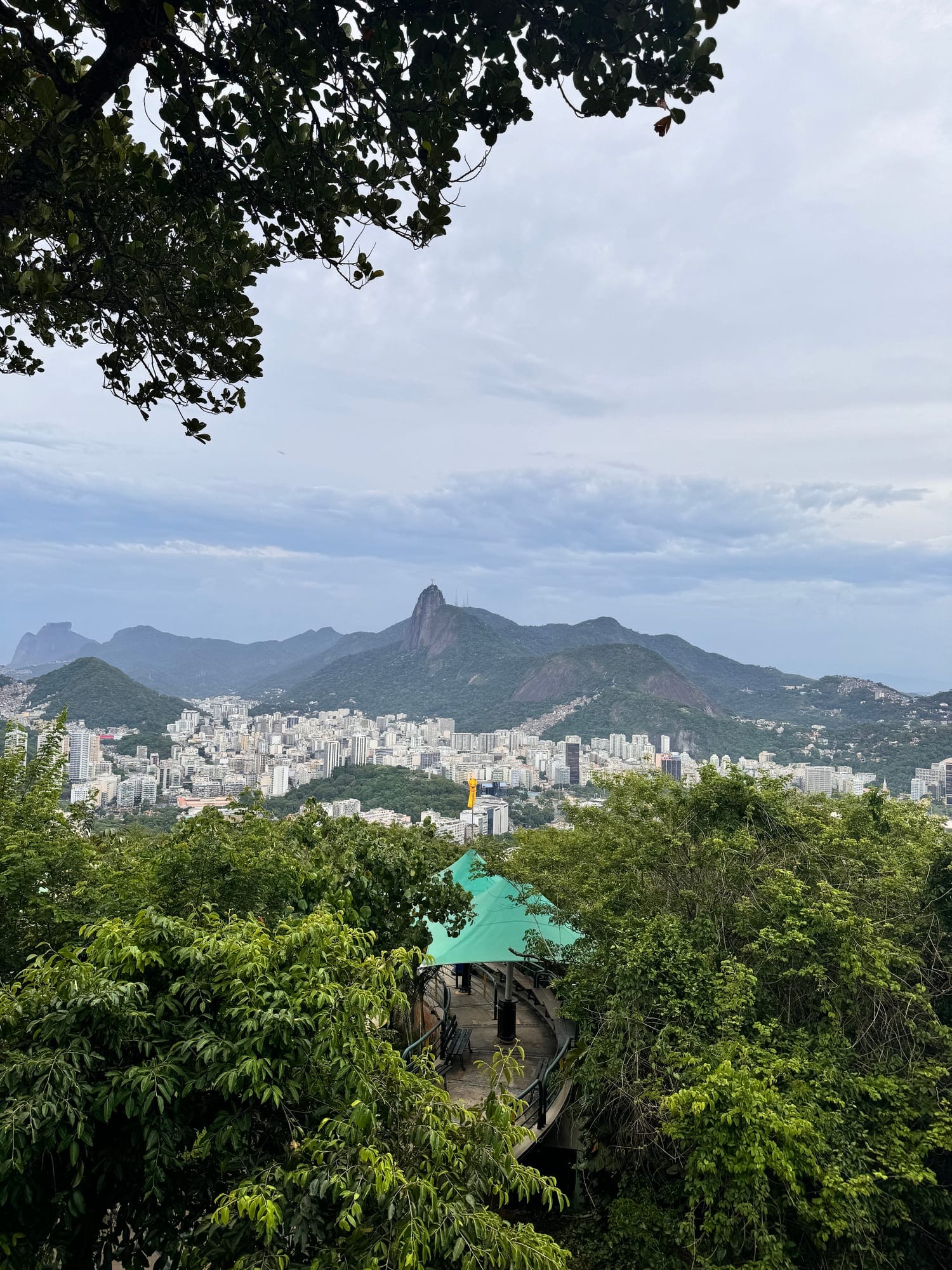
The famous transparent cable car (Bondinho do Pão de Açúcar) takes you up to two different levels, and the view becomes increasingly spectacular. If I could give you just one piece of advice, it would be to go shortly before sunset. That way, you’ll see Rio in daylight, enjoy the sunset, and stay long enough to watch the city lights come on.
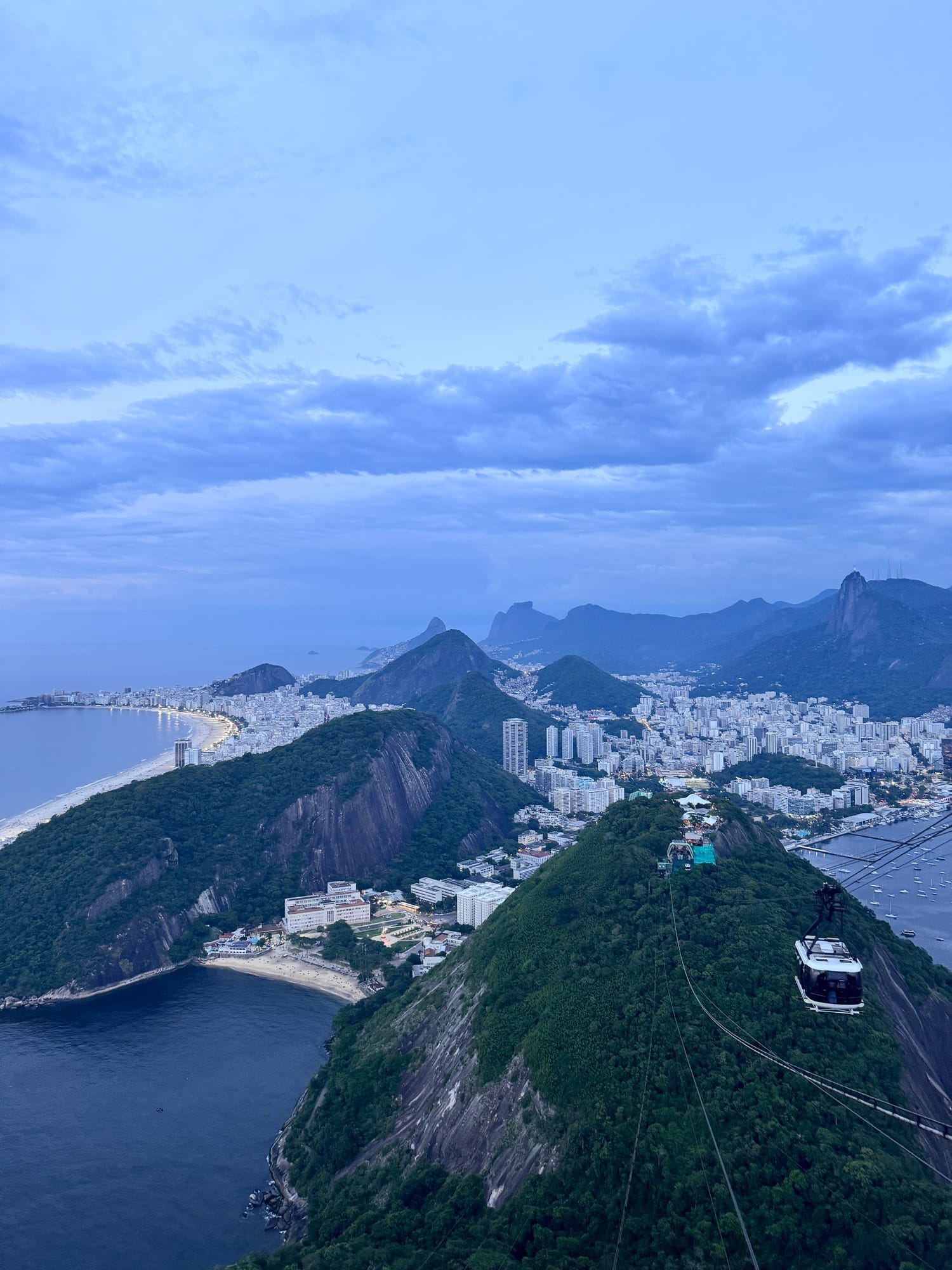
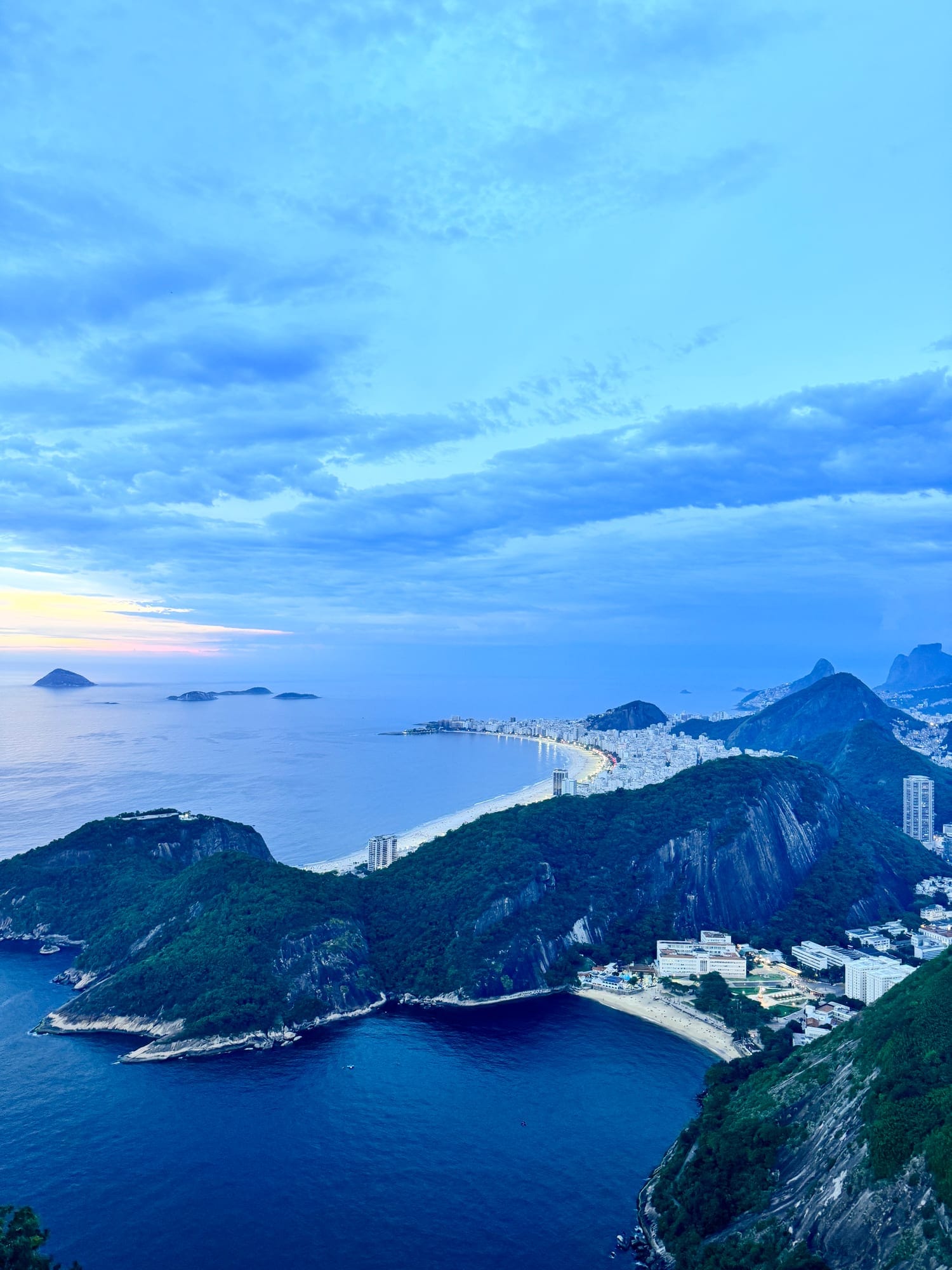
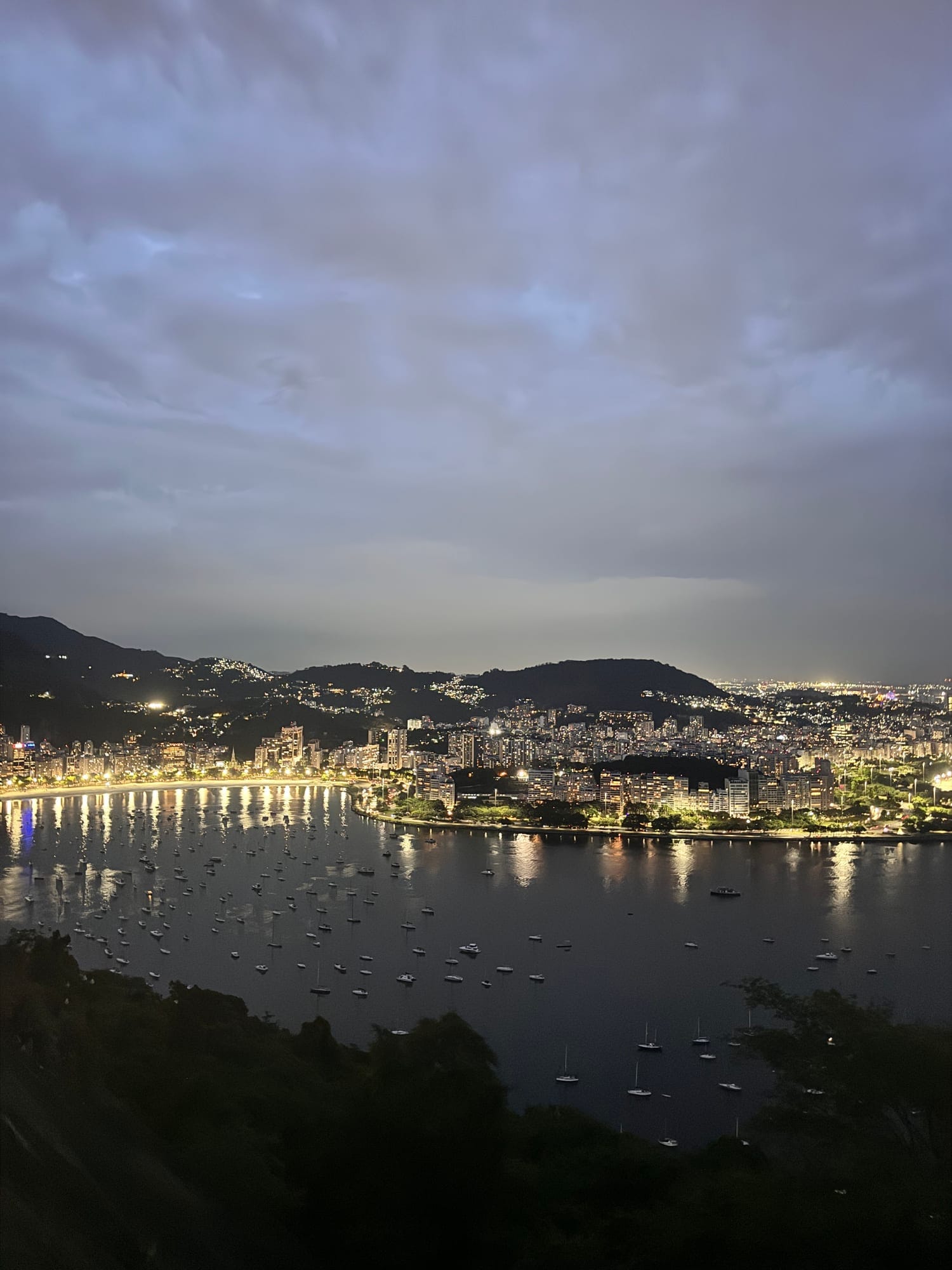
It is one of those sights that can never be perfectly captured in a photograph.
Samba under the stars
Think the day is over? Not even.
From Sugarloaf, we headed to Pedra do Sal, the historic area known as Pequena África (“Little Africa”). One of the most authentic outdoor samba nights in Rio takes place there (Roda de Samba da Pedra do Sal).
There were small stalls selling drinks and food, people everywhere, music playing in the middle of the square, and groups of people gathering around the musicians to dance and enjoy the night.
We also stopped for one last beer at Bafo da Prainha, an outdoor bar in Largo São Francisco da Prainha.
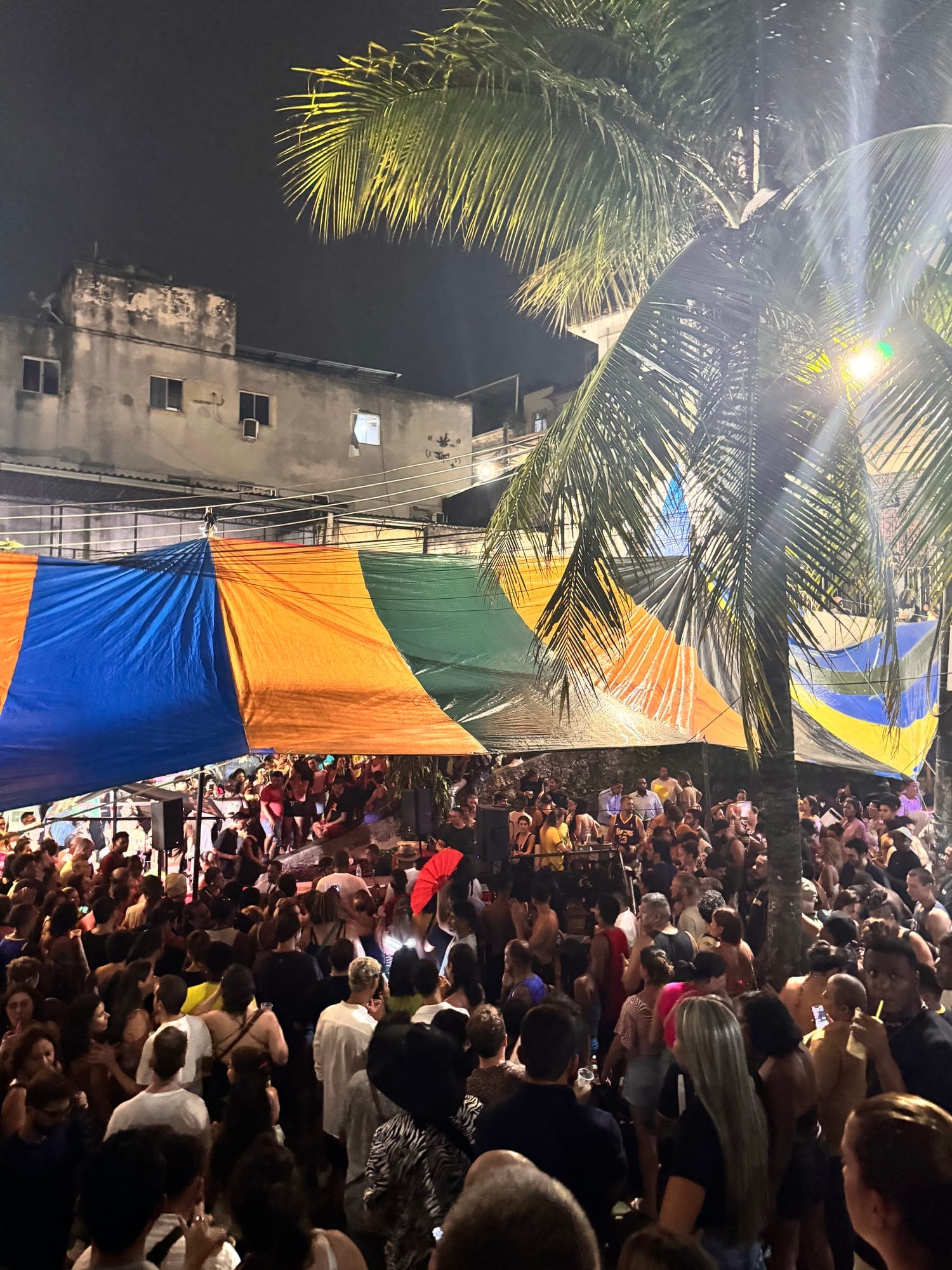
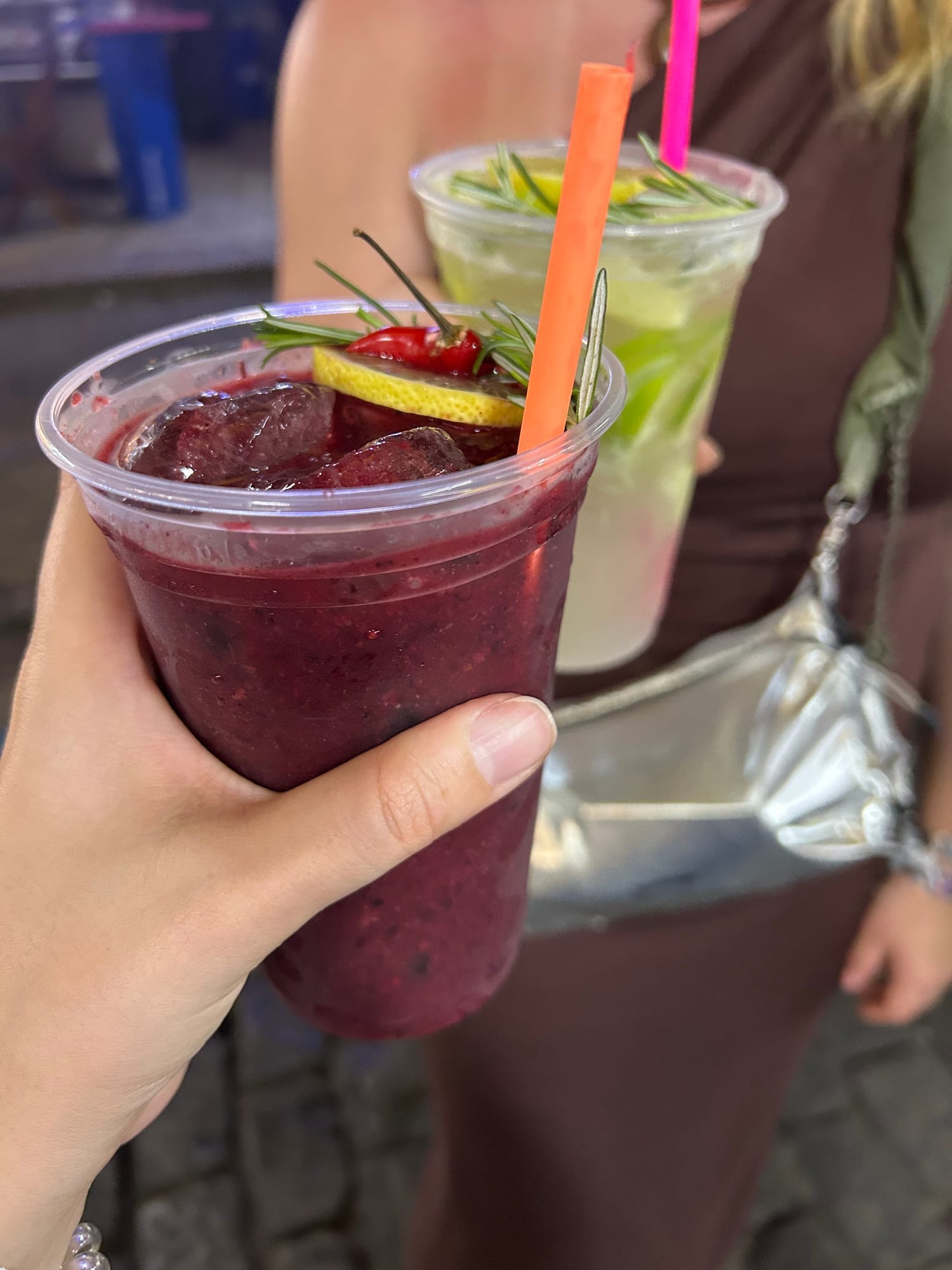
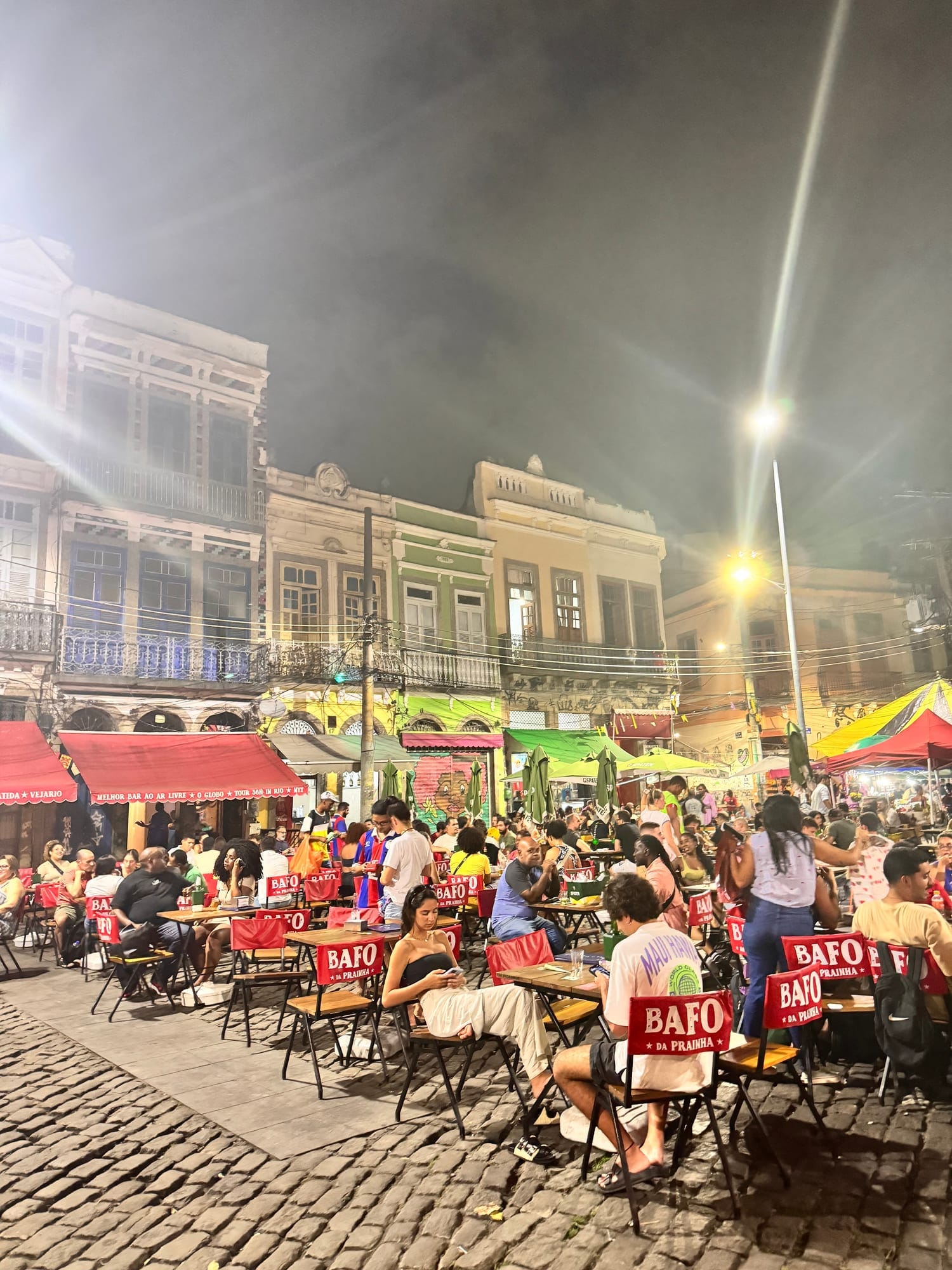
And somewhere along the way, I found myself thinking that Rio didn’t resemble the image I’d had in my mind before arriving at all. It was far more vibrant, far more human, and, above all, filled with music.
See you in part two!